A family-owned group
A human adventure above all
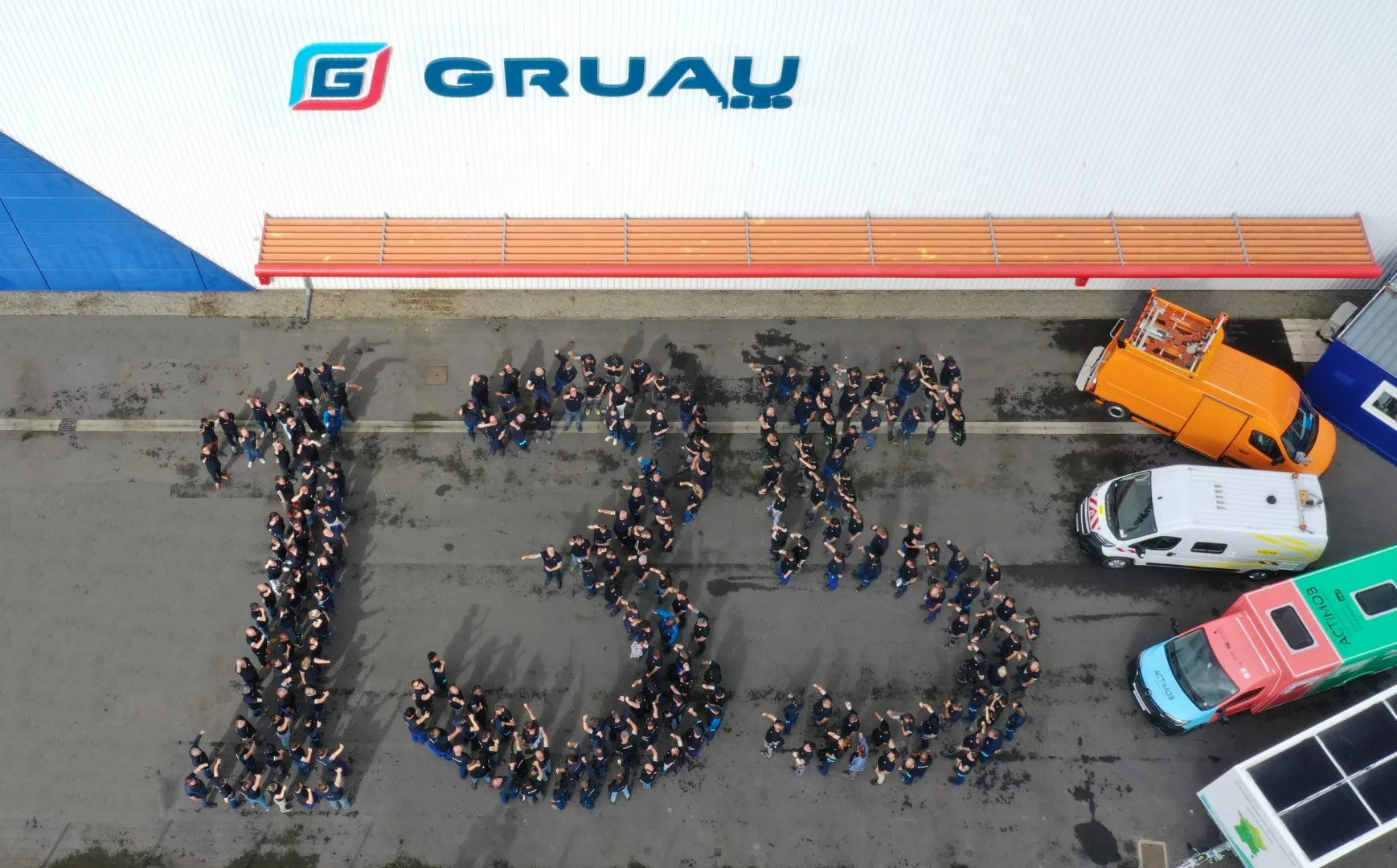
135 ans d'histoire Gruau
Our work as a bodybuilder is fascinating, as it is linked to the ever-changing automotive world and because it has always undergone major developments.
- Developments driven by innovation and technology
- Developments driven by lifestyles and customs
- Developments driven by the urbanisation of regions and countries
Today more than ever, the light commercial vehicle is closely connected to the urban world and its distribution requirements.
Present in all niche markets in the light commercial vehicle sector, Groupe Gruau is organised around two major divisions: Urban Mobility and Medical Vehicles, to provide the best transport solutions for our private and public customers.
137 years of history in pictures: discover the Group as told by Patrick Gruau, the company’s 5th captain.
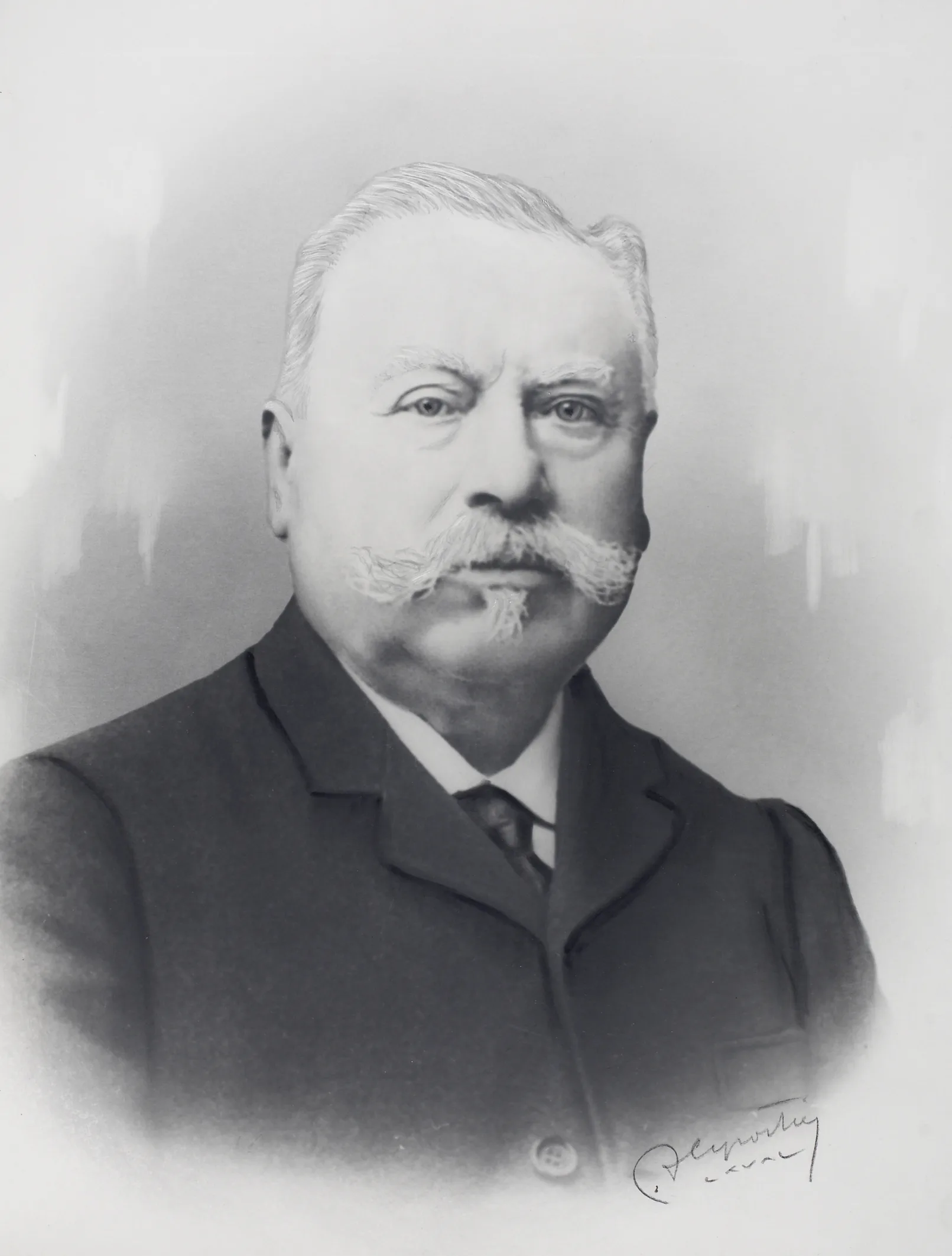
René Le Godais
René Le Godais
(1839-1911)
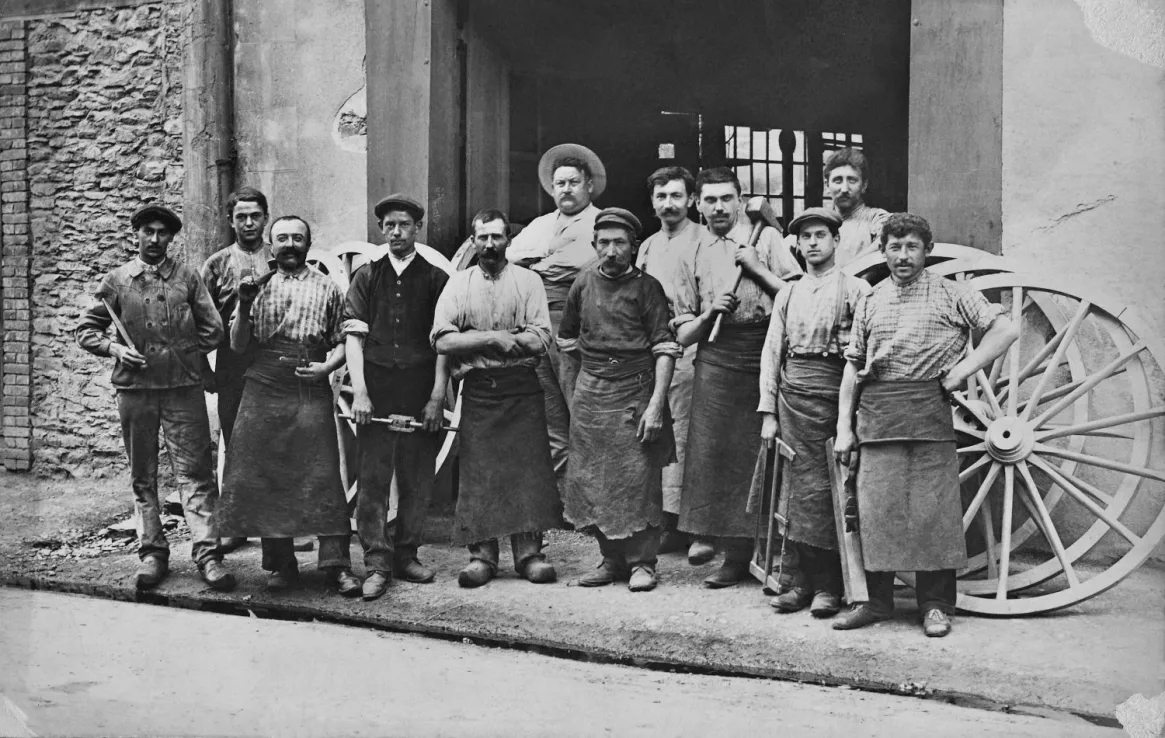
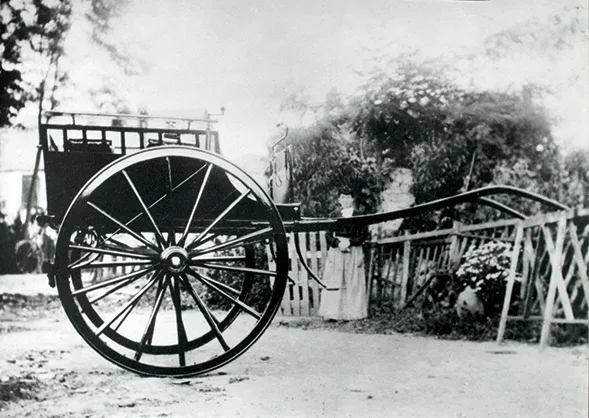
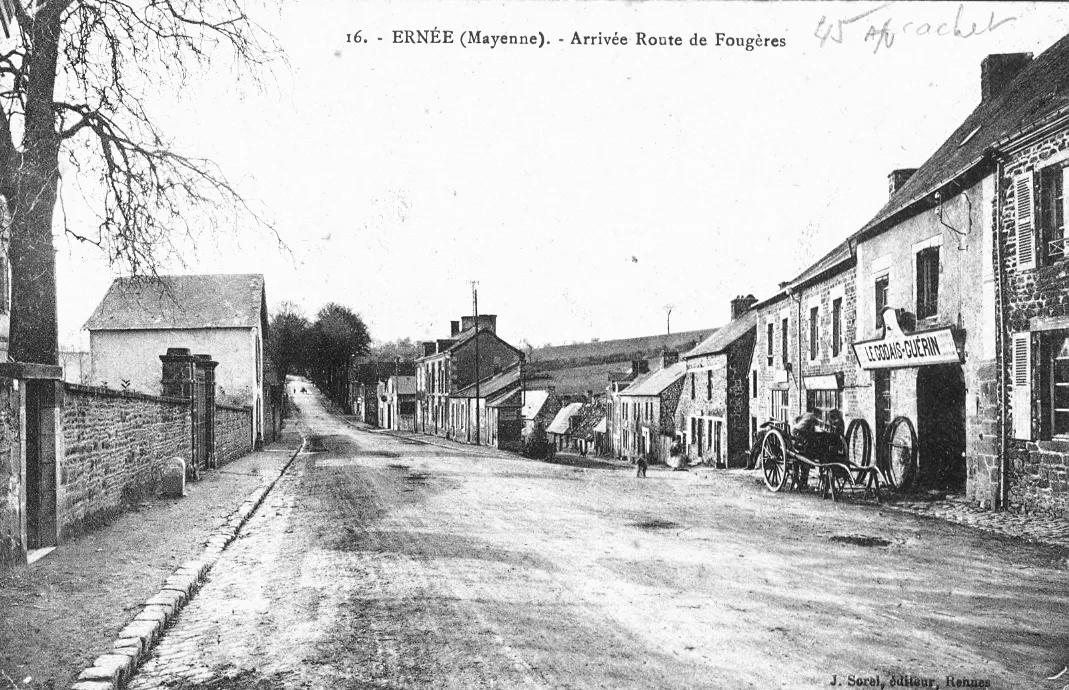
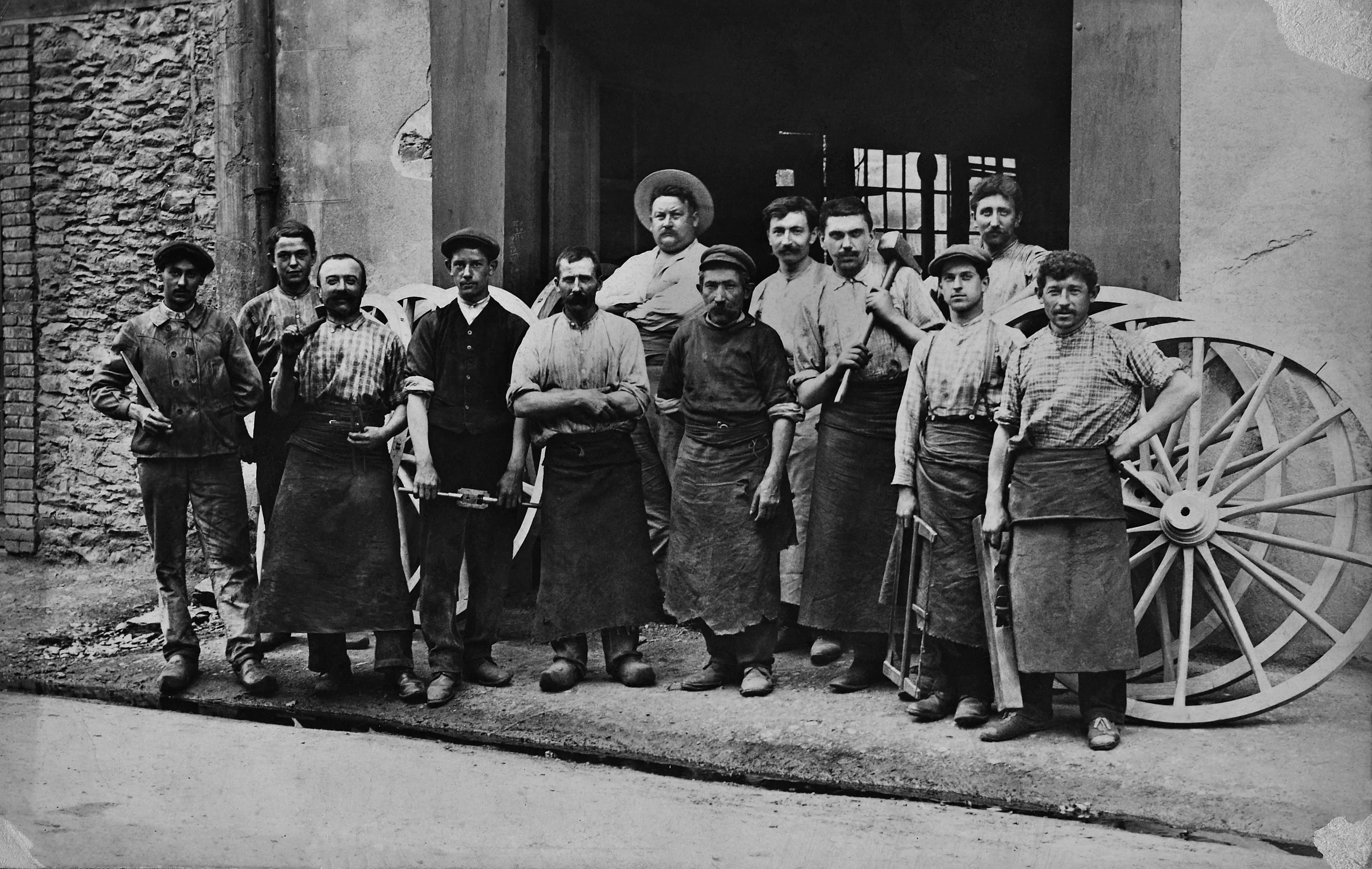
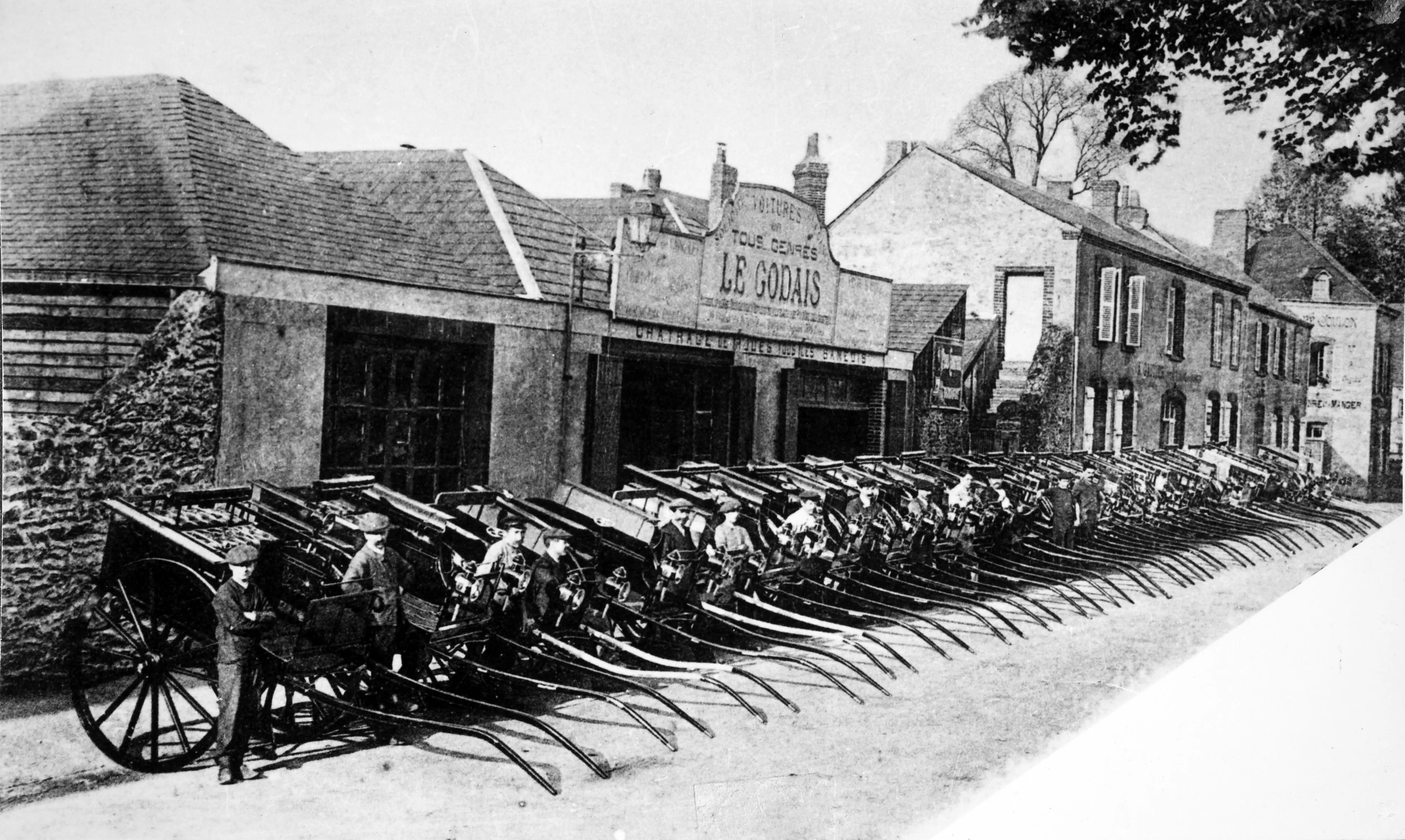
Born into a family of woodcutters who became wheelwrights as early as 1830, René Le Godais leaves the family business based in Ernée (53). In 1889, he settles in Laval with a few companions. He sets up his own business manufacturing carts in front of the fairground and equips it with an exhibition window. He would pass on his keen sense of business to his son, also named René. More than 10,000 carts would leave the Le Godais workshops. This Laval location is the historic reference point for the creation of the company.
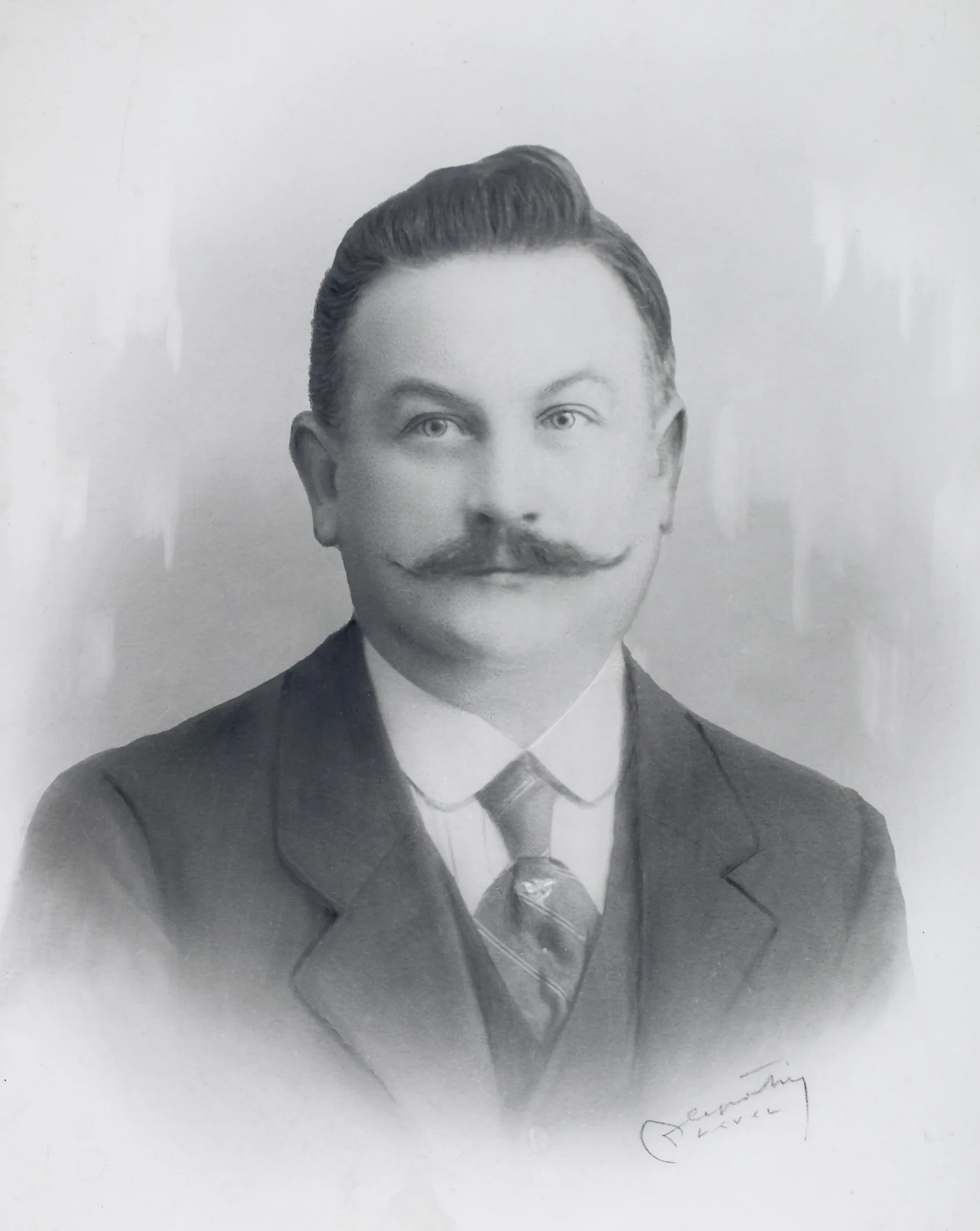
René Le Godais Junior
René Le Godais Junior
(1881-1925)
Succeeding his father, René continues the expansion of the family business. He welcomes many companions and apprentices, including a certain Marius Gruau, himself from a line of wheelwrights originally from Maisoncelles (53). René dies suddenly at the age of 44. Five years later, René’s widow calls Marius back, and he takes over the body shop. Some time later, Marius marries Angèle, the only daughter of René and his wife, Louise.
On the road to industrialisation
The emergence of an industrial leader
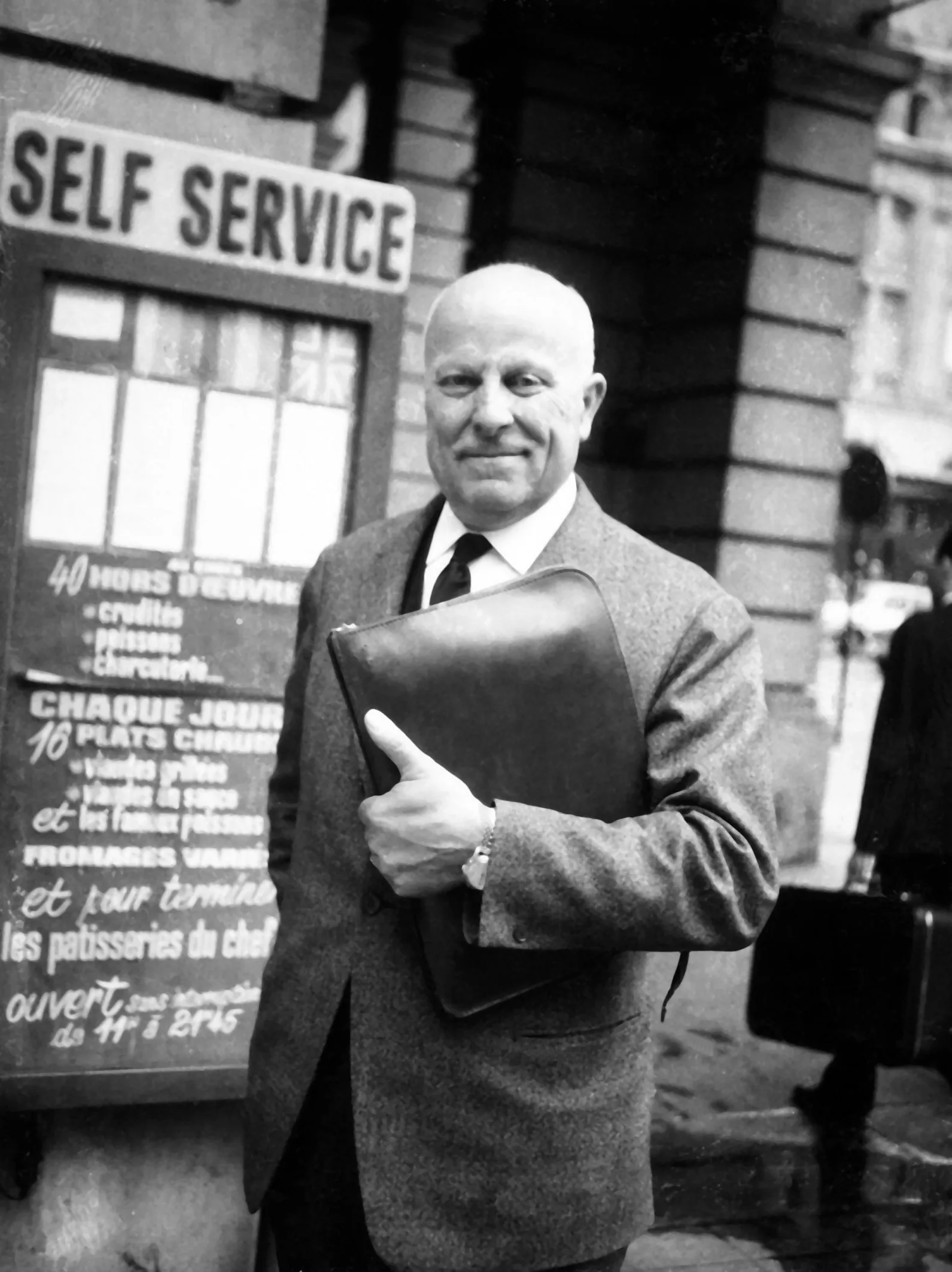
Marius Gruau
Marius Gruau
(1906-1994)
Noting that automotive manufacturers do not meet all customer needs, Marius Gruau, who joined the company in 1929, embarks on vehicle conversion and fitting. Founded in 1933, the Gruau body shop designs and bodies passenger cars, as well as vans, coaches, trucks, semi-trailers and livestock carriers. Winning a major order for 250 coaches for the army, Gruau moves from craftsmanship to an industrial scale.
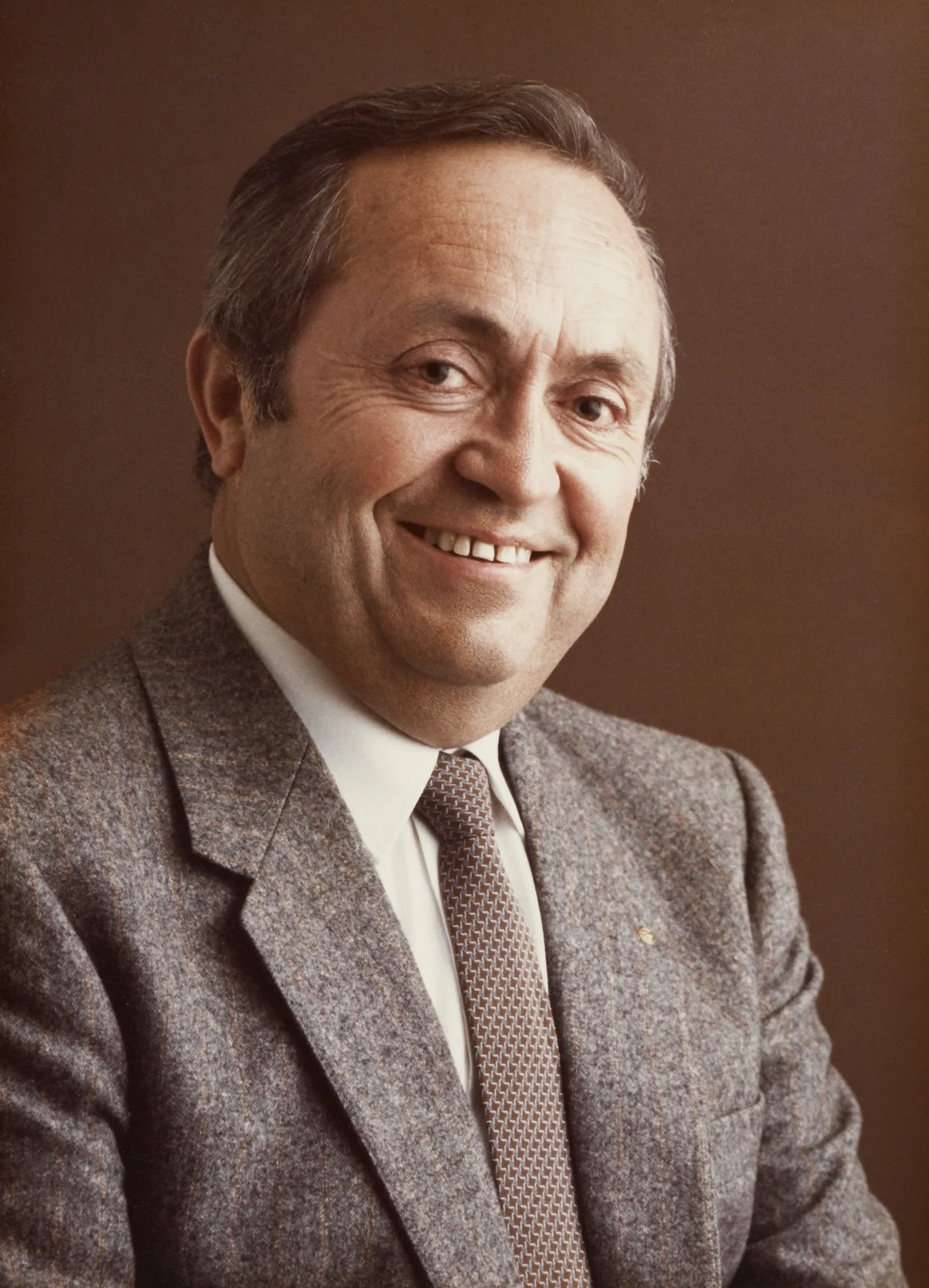
René Gruau
René Gruau
(1932-1984)
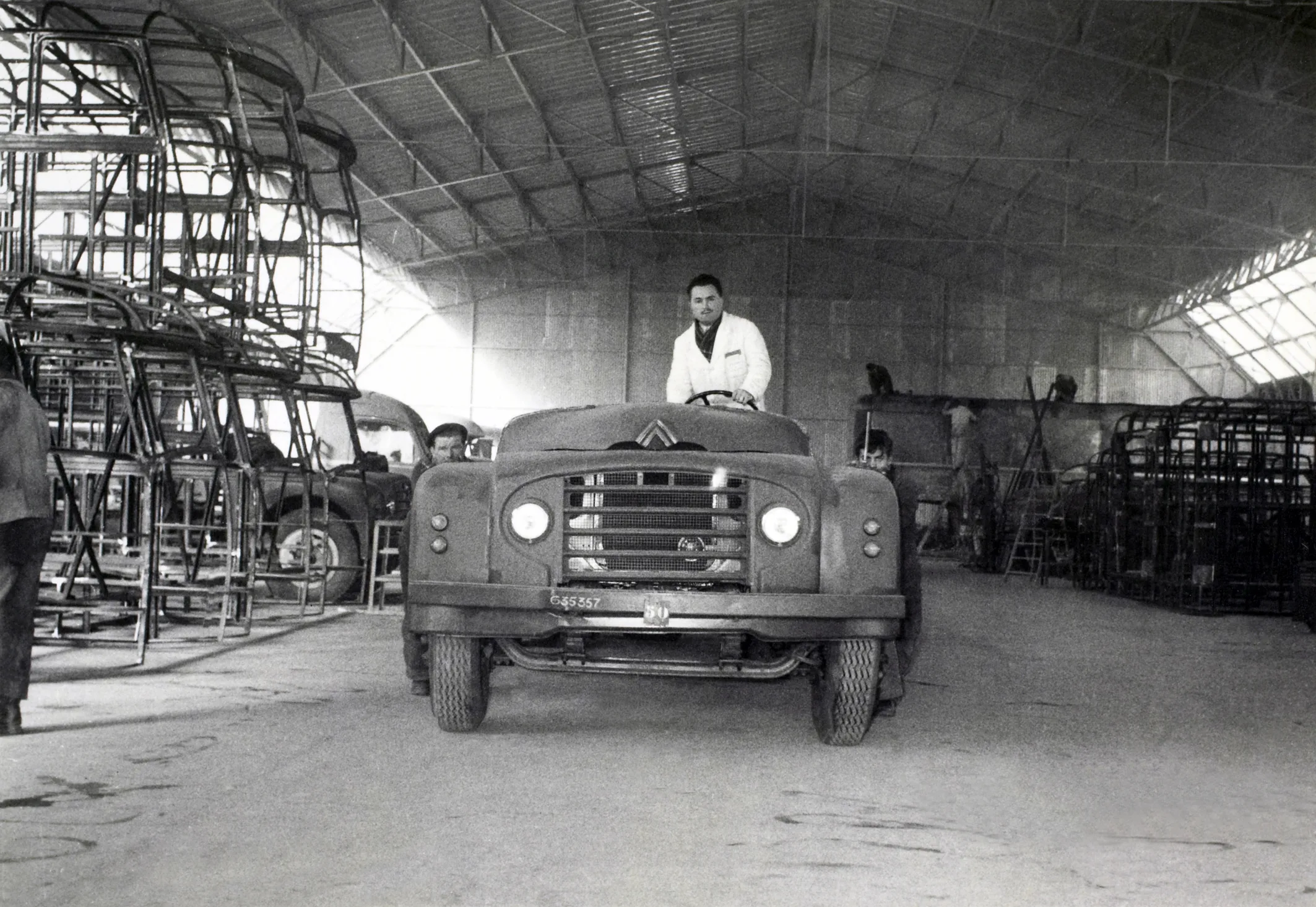
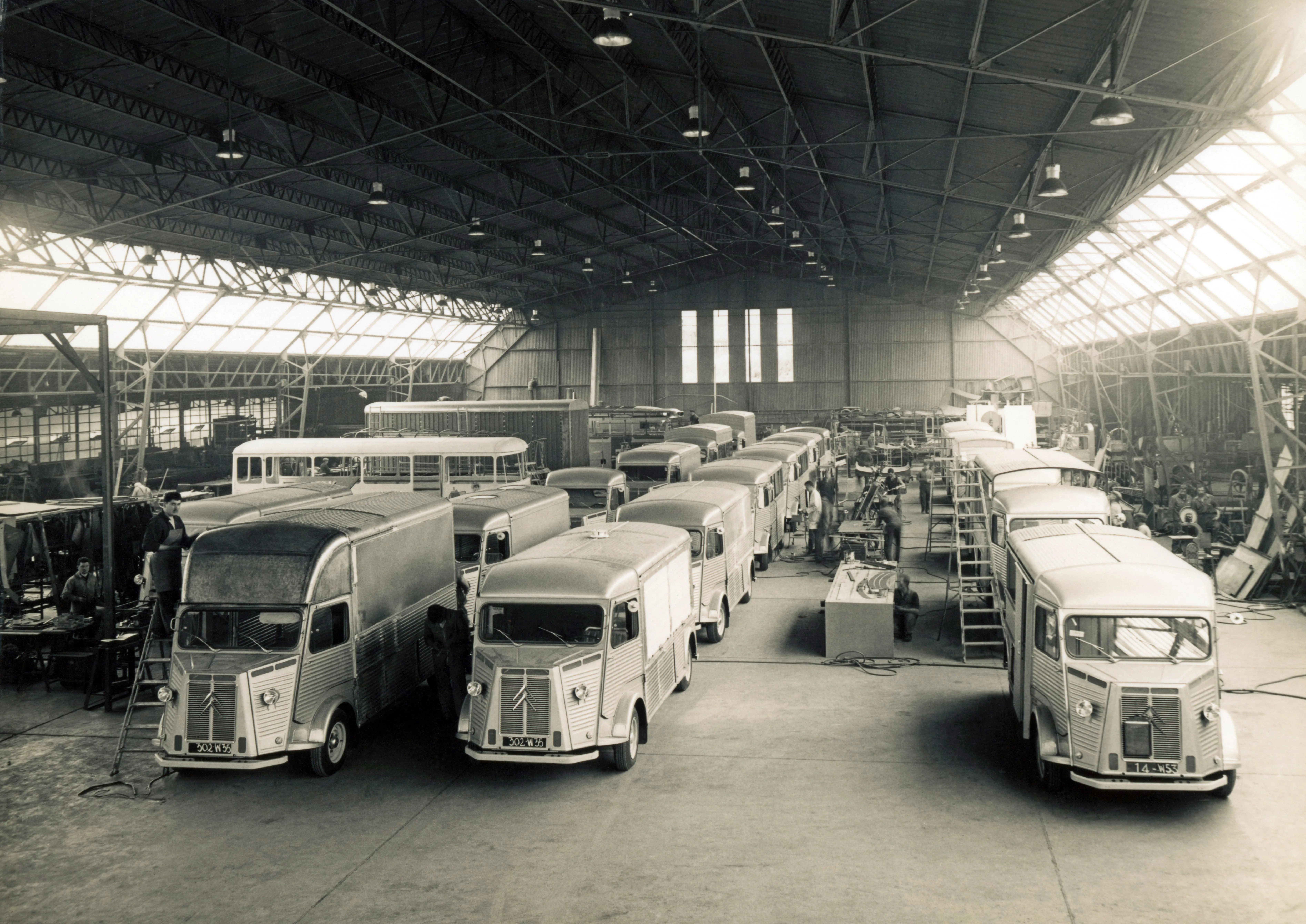
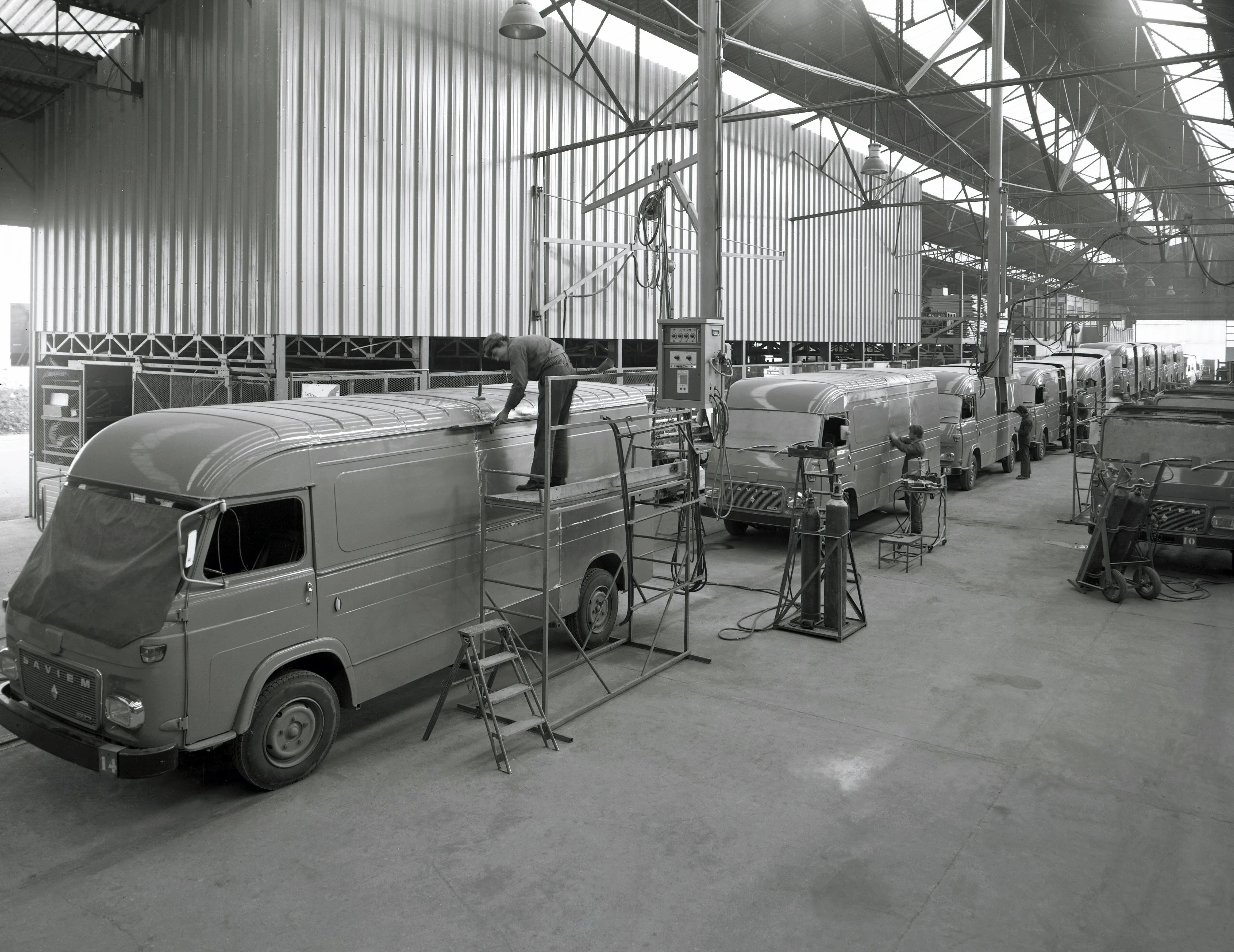
Winning a major order for 250 coaches for the Air Force, Gruau makes the definitive move in 1955 from craft activity to an industrial scale. René Gruau, Marius’s son, creates the engineering office required to deliver this major contract.
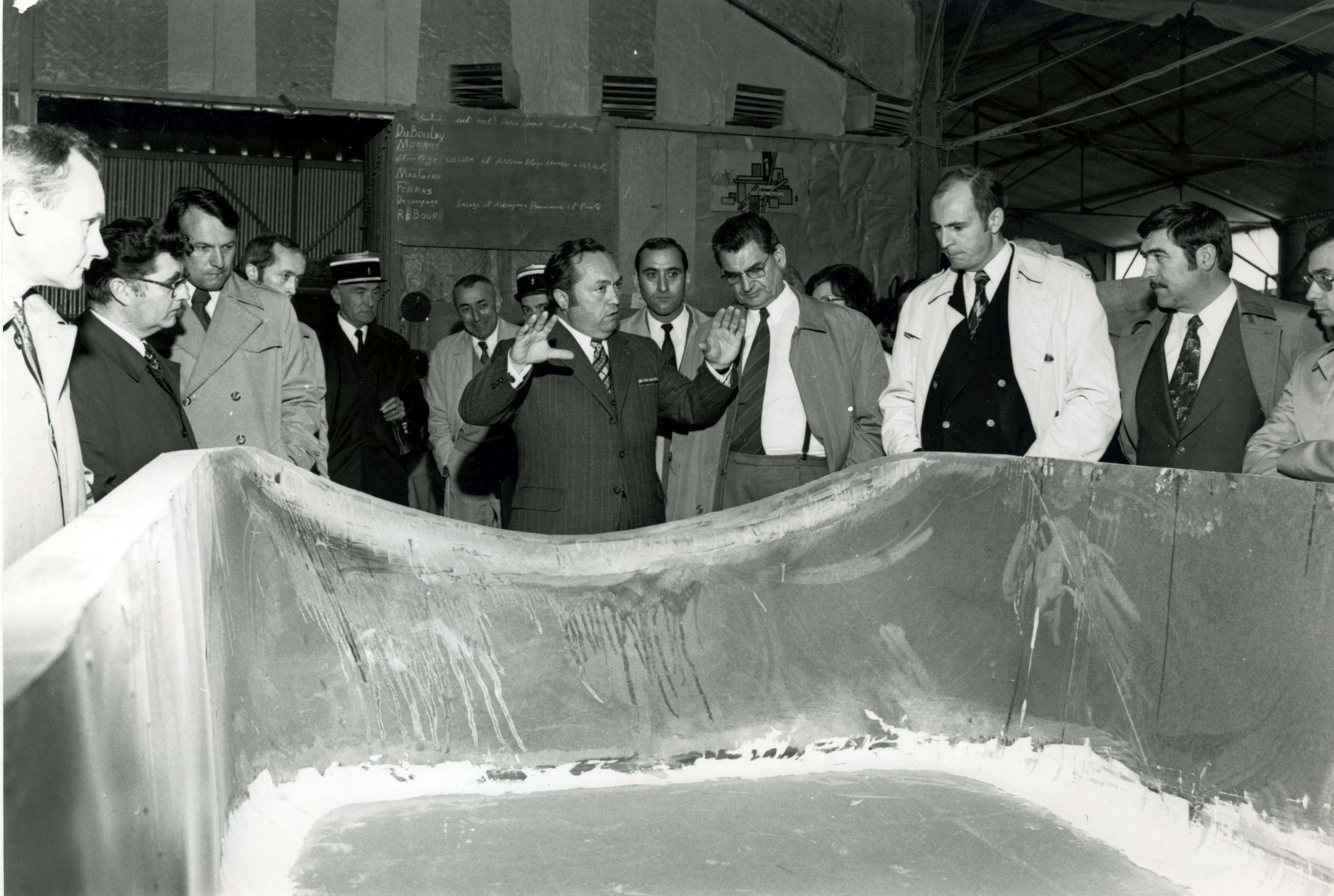
Export success, relocation from Rue Lemercier in Neuville to Rue du Ponceau in Laval… Gruau’s reputation then extends to the western half of France, and the regional generalist bodybuilder works mainly with two automotive manufacturers: Citroën and Saviem-Berliet. René Gruau strengthens the industrial expansion of the site, which became berthevinois (1969). He gradually focuses Gruau on the light commercial vehicle and develops partnerships with brands.
Sustainability and growth
Leadership rooted in the Group’s human values
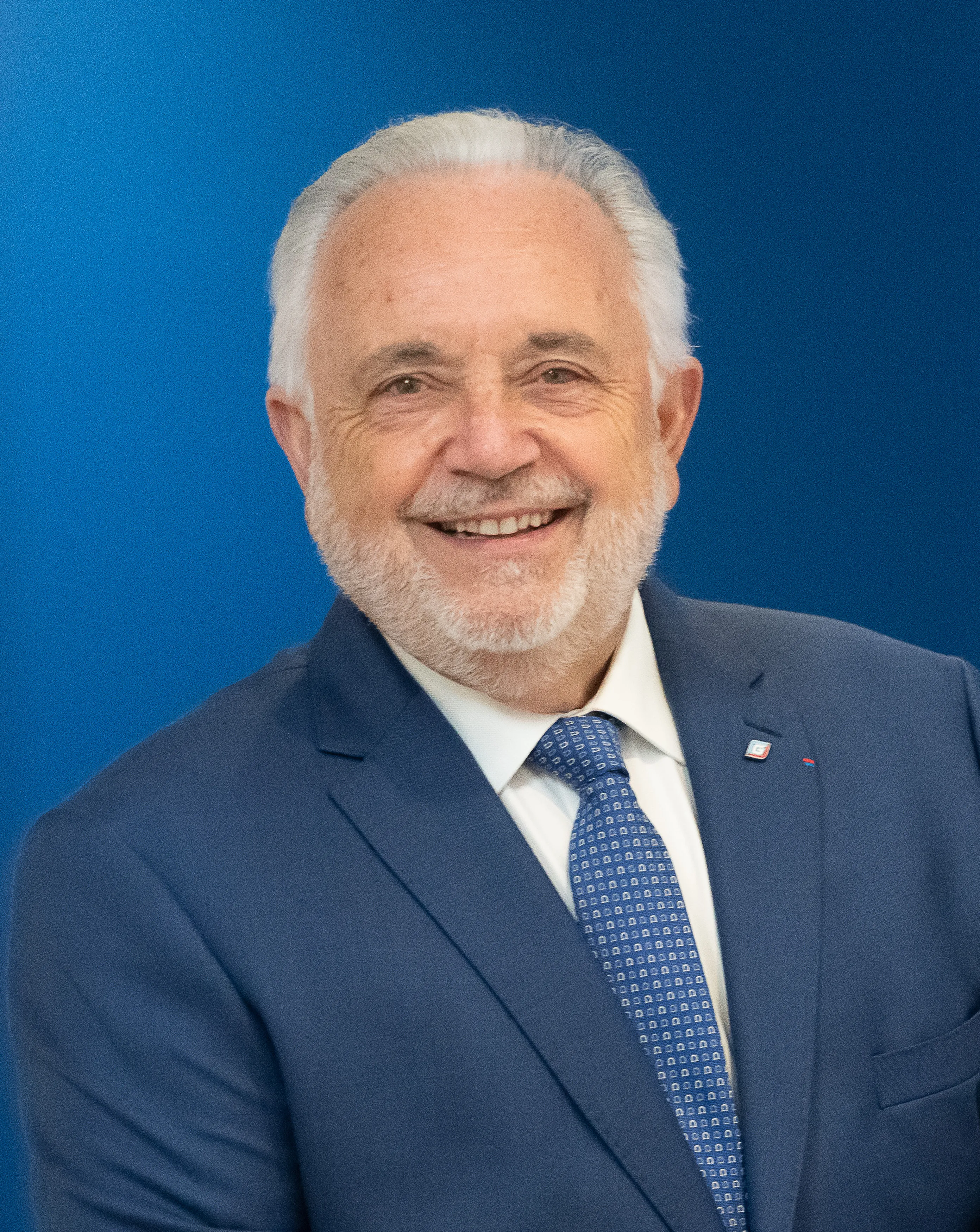
Patrick Gruau
Patrick Gruau
(since 1984)
Joining the company in 1980, Patrick, René’s eldest son, is tasked with developing Gruau in eastern France and the Île-de-France region. Following his father’s sudden death in 1984, he takes over the reins of the company at the age of 28, thanks to the trust of his family and senior management. Drawing inspiration from several study trips to Japan and then the United States, he implements a Total Quality approach driven by participative management and launches his first company project in 1988.
Patrick develops external growth from 1987, and more strongly from the mid-1990s. The Group becomes multi-specialist, multi-site, multi-manufacturer and positions itself from the early 2000s as the European No. 1 in bodywork for light commercial vehicles.
Diversification and external growth
Between acquisitions and new locations
To diversify its markets, get closer to its customers and strengthen the long-term sustainability of the Group, Patrick Gruau chooses to acquire several bodywork companies. In order to win new markets with manufacturers in particular, new sites also are created.
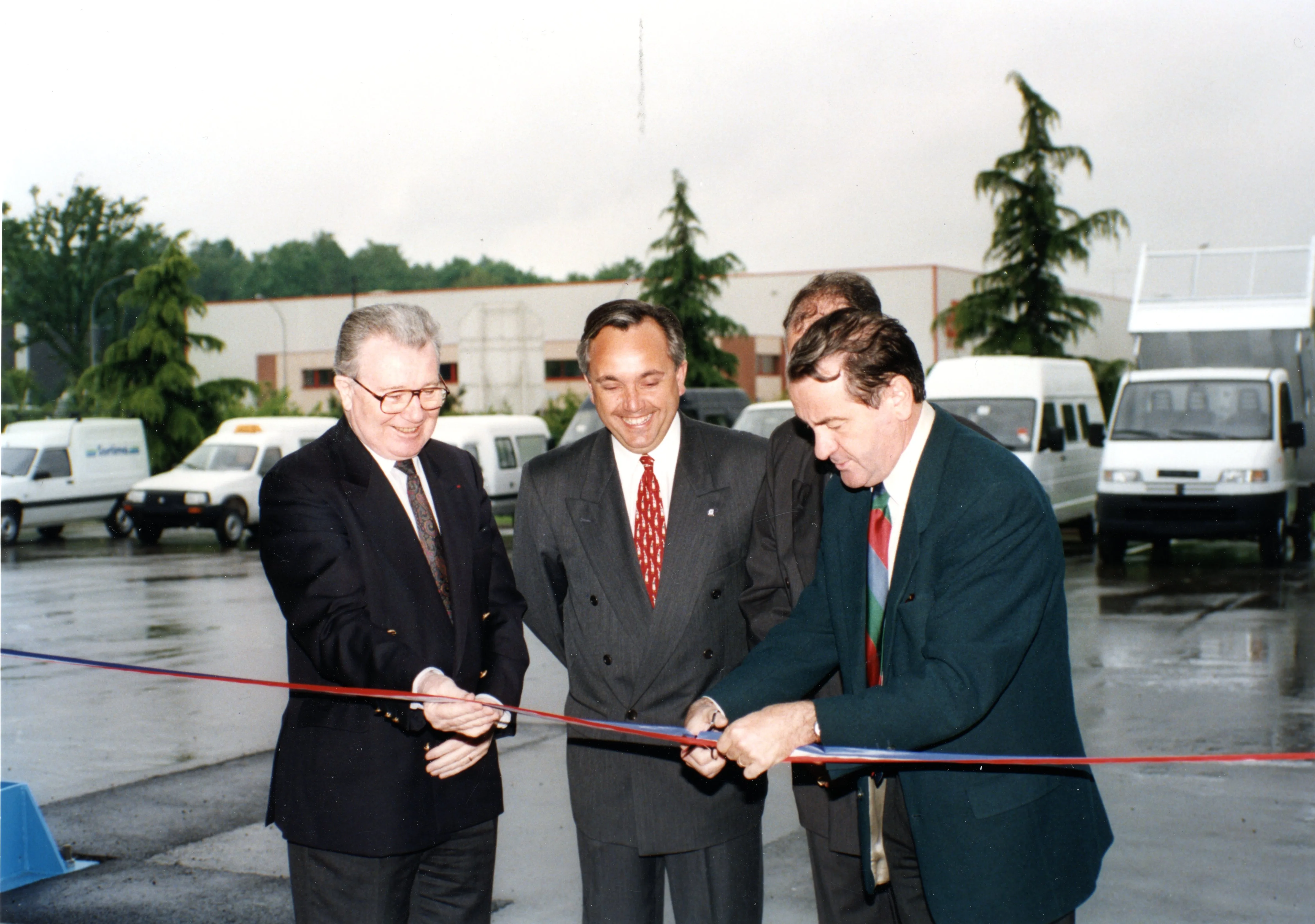
1995 inauguration Gruau Paris
1987
Gruau sets up in the Paris region
For its first external growth operation, Gruau buys from Christian Girardière the family business Enac-Sapa located in Gennevilliers, northwest of the capital.
With a workforce of 45 employees, Enac-Sapa converts vehicles from Citroën, Ford and VAG. Gruau moves a little closer to major principals and now has a showroom to display its expertise. Renamed Gruau Paris and relocated to modern premises, expanded in May 1995, the company becomes the spearhead of the business, notably for assembling bodywork kits, a new service designed by Gruau Laval that led to the creation of the Gruau Network.
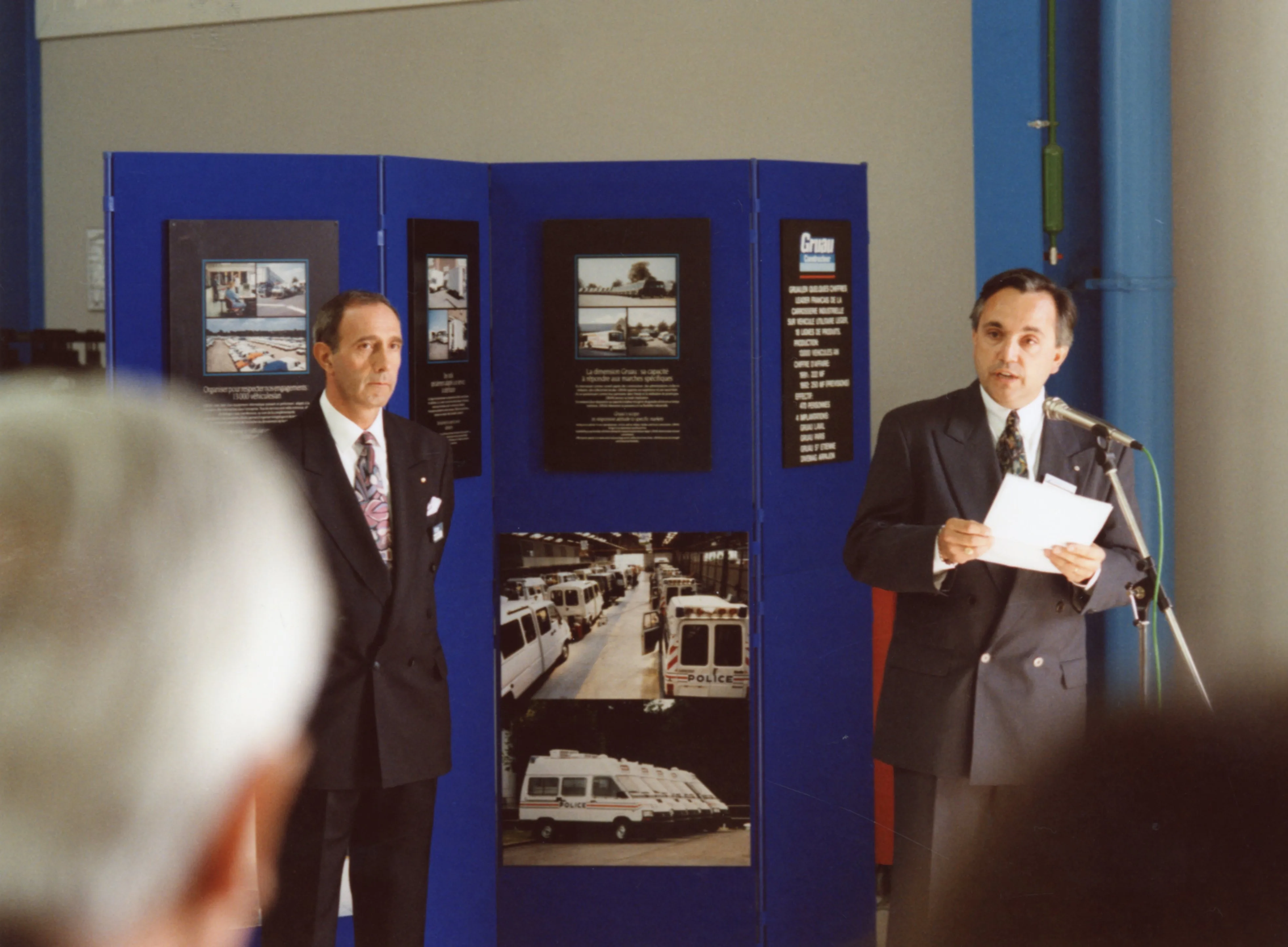
1992 Inauguration Gruau St Etienne La Talaudière
1991
Gruau expands its expertise
After the Paris region, the Rhône-Alpes region is targeted with the acquisition of the company Ducarme in Saint-Étienne. Bernard Ducarme, a close friend of the Gruau family, hands over his family business specialising in funeral vehicles.
At the time of its acquisition, it produces seventy per year, mainly for the local market. This gives the Mayenne-based group its first foothold in medical vehicles and enables it to develop innovation in a field closely linked to customs and traditions: Ducarme thus produces the first MPV-style hearse, named Rivage. Today, more than 300 Ducarme funeral vehicles are produced each year. Since 2022, Ducarme’s funeral activity has joined the Group’s Normandy site in Argentan.
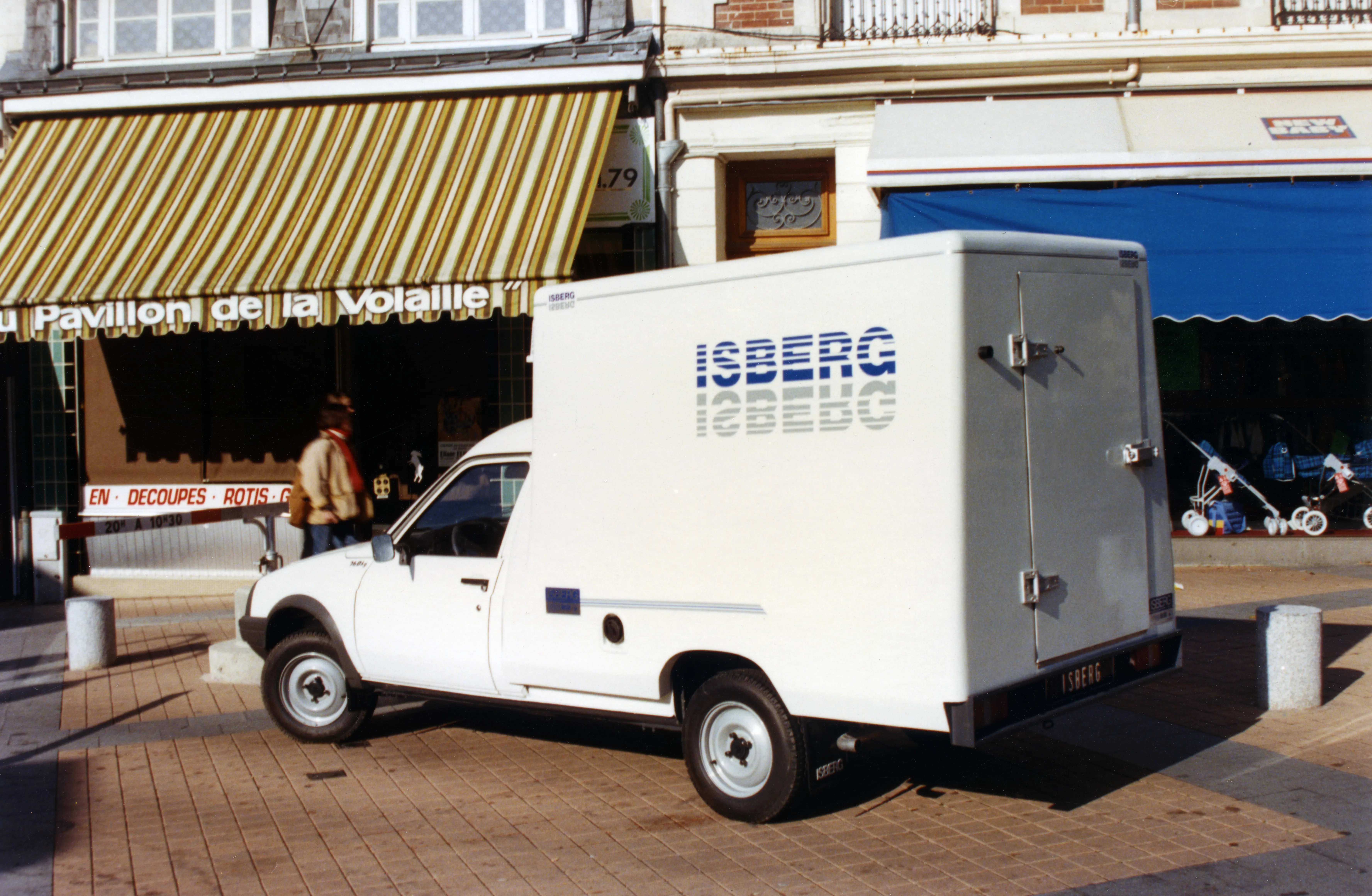
1995 Isotherme Citroën C15
1995
Agathon-Désile joins Gruau
In April, the Le Mans-based company Desile-Agathon, specialising in Isberg-brand refrigerated vehicles Isberg, joins the Group. This century-old company, led by Bernard Agathon, has valuable capabilities for the Group, notably the manufacture of composite panels and a high-potential site well located in Le Mans, close to Laval.
A new industrial organisation is put in place between the two sites: Isberg vehicles are transferred to Laval, and all specific vehicles from the Mayenne site are consolidated at Gruau Le Mans.
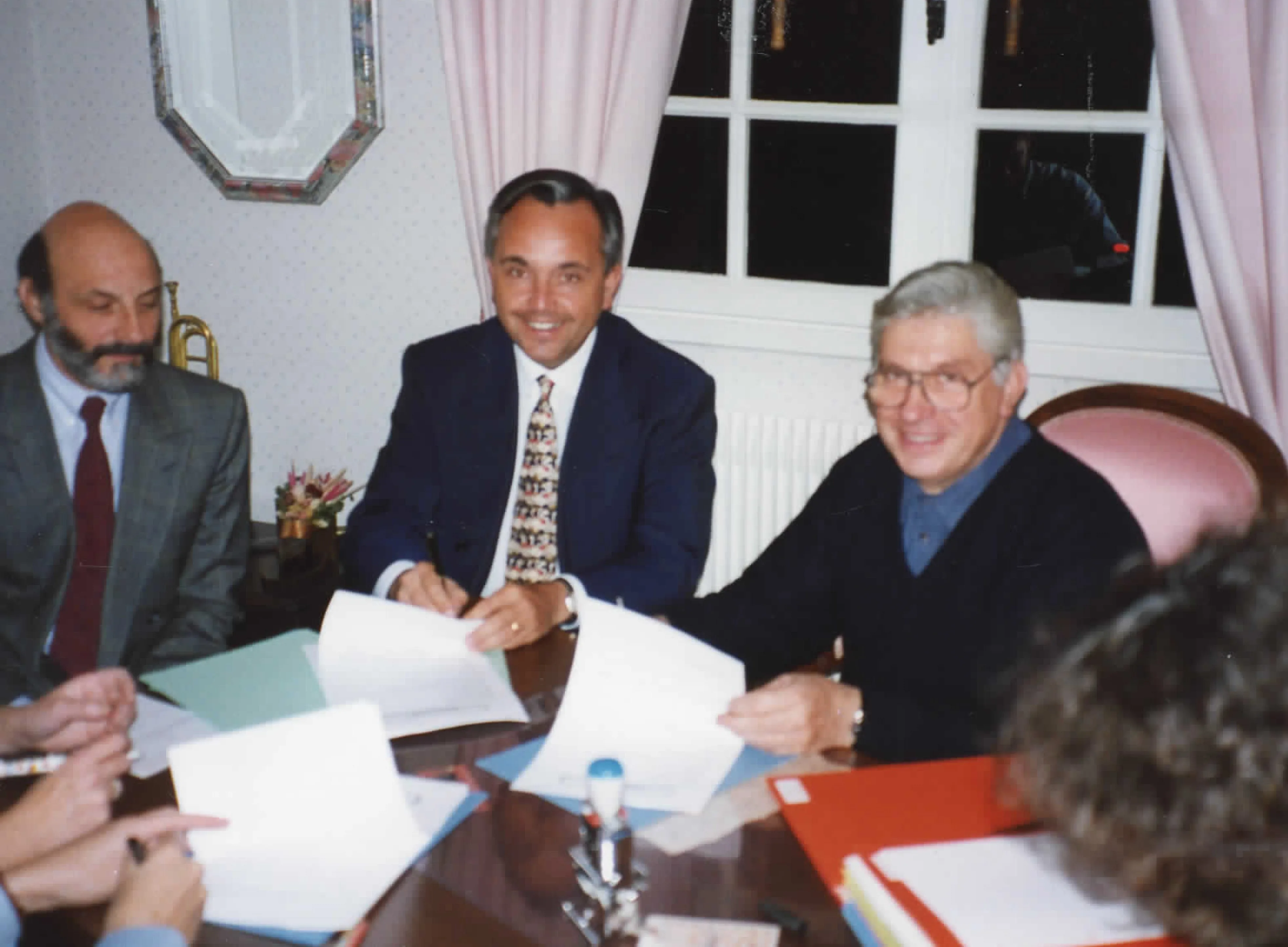
1995 Achat Picot
1995
Picot joins Gruau
On 2 August, the Picot company near Savigny-lès-Beaune joins the Group. Acquired from Jean-Claude Picot, it designs and manufactures medical “red” vehicles, in other words ambulances for firefighters, as well as a whole range of other first-response fire vehicles.
The local workforce, more oriented towards the wine-growing sector, ultimately undermines the Group’s efforts to support the activity, which is gradually transferred to Gruau Tours in a more industrial setting.
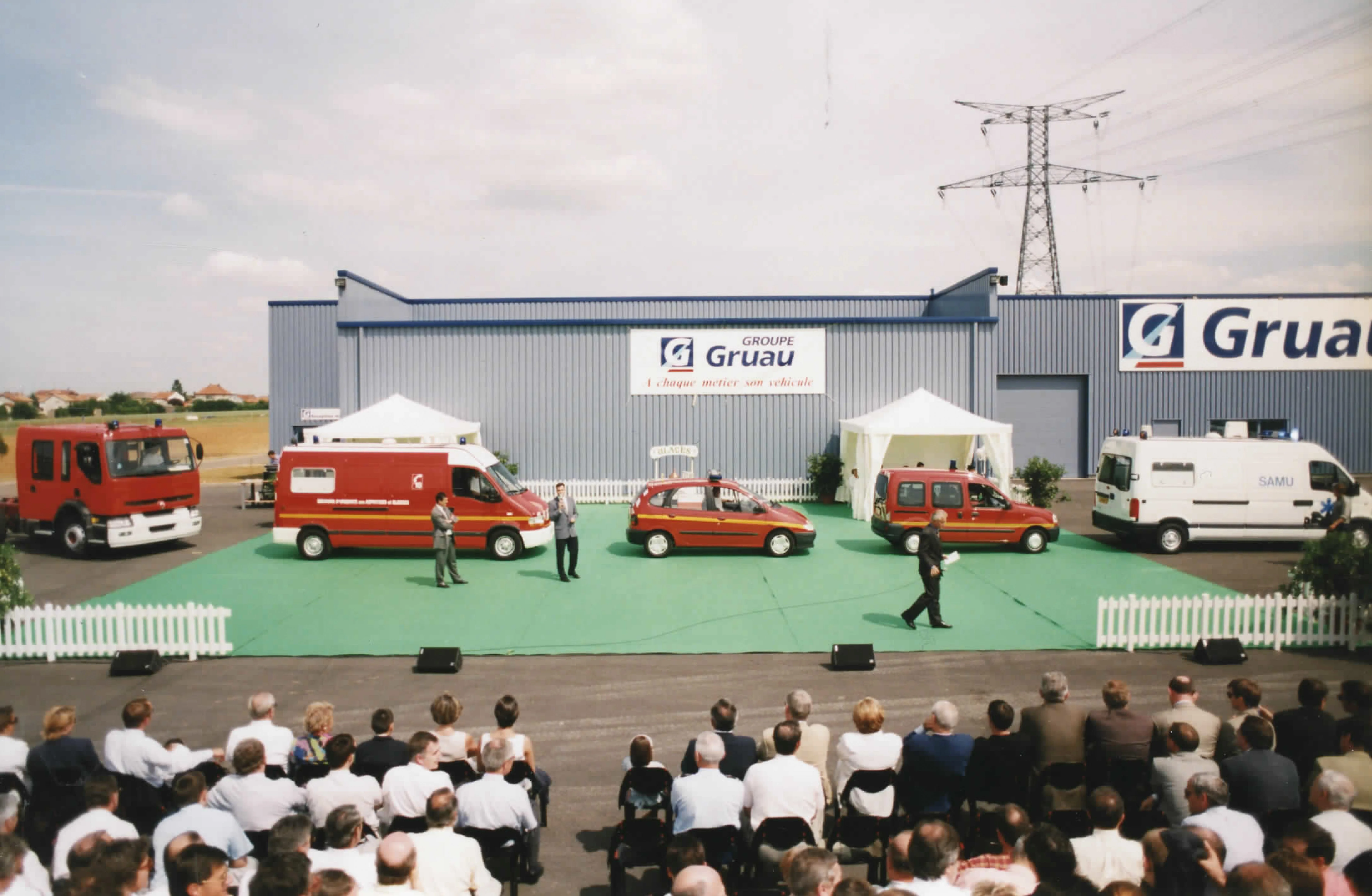
1998 Inauguration de Gruau Lorraine
1998
Creation of Gruau Lorraine
Thanks to winning a first tender for Renault, Gruau builds a new “end-of-line” plant in Sainte-Marie-aux-Chênes, near Metz, in the immediate vicinity of the Renault Batilly site. In a brand-new building inaugurated in June, Gruau fits out 9- and 16-seat minibuses based on Master-type vehicles.
Several productions follow one another, specialising this site in small-series subcontracting for Renault and, given its high flexibility, in producing Key Account fleets across all activities for the Group’s other sites. Gruau Lorraine has also developed a local activity assembling kit products for the Lorraine market.
2001 Achat SANICAR
2001
Strengthening the medical division
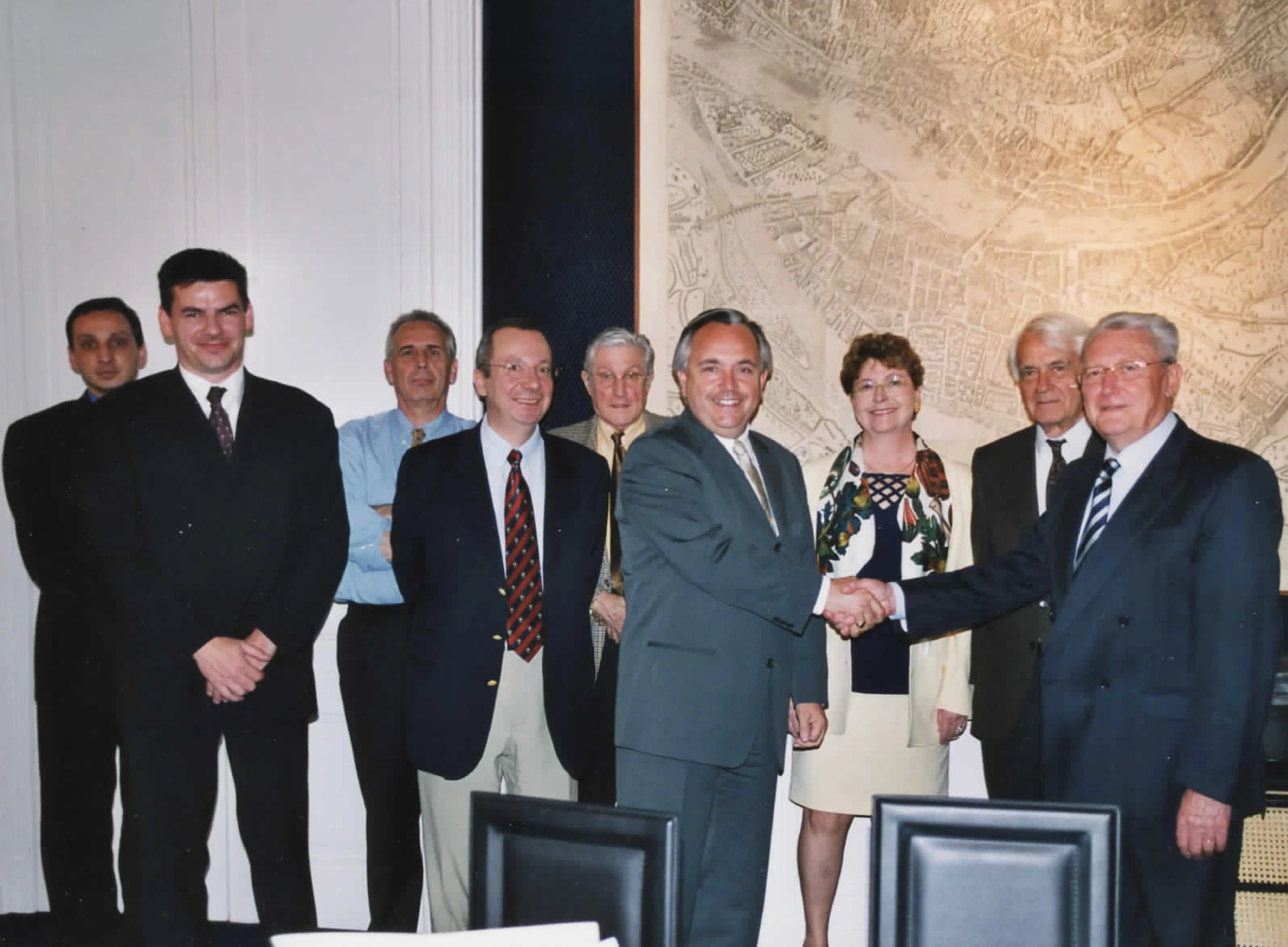
Sanicar, based in Grenoble, joins the Gruau perimeter. A former subsidiary of Renault Véhicules Industriels, with 34 employees, the company was taken over by Jean Chabanel. It manufactures red and white ambulances under the Sanicar brand, a well-known name in France and also in Maghreb countries, particularly for its conversions based on Renault vehicles.
It enables Groupe Gruau to continue its progress in the medical vehicle market, as does the company Petit, acquired at the same time. In 2021, Sanicar becomes Gruau Grenoble, and the brand is retained on the ambulances.
2001 ambulance blanche SAMU Petit
2001
Development of the ambulance business
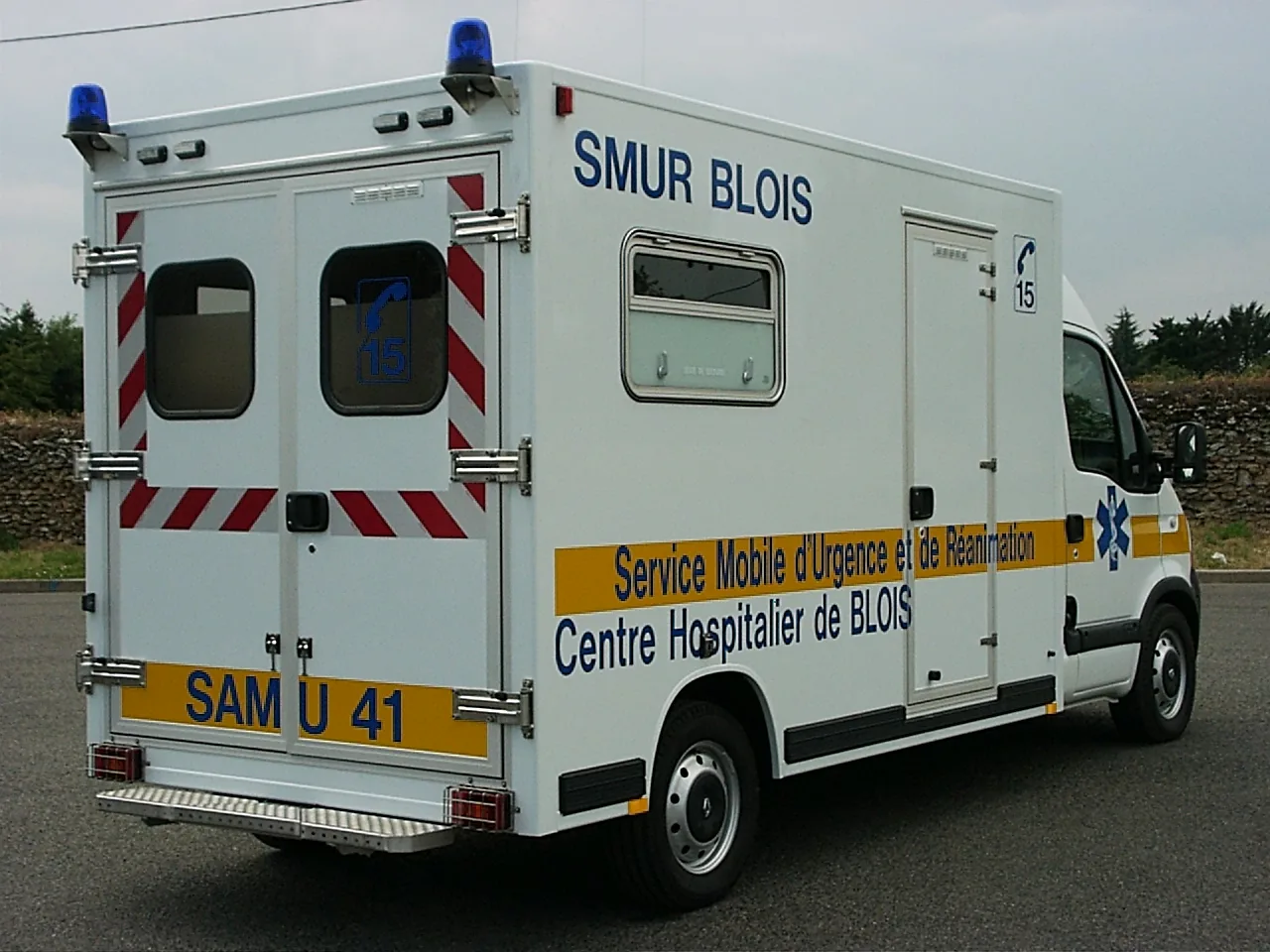
Petit joins the Group. The family business is then led by the founder’s son, Patrick Petit. He is a member of the French Bodywork Federation and a long-time friend of Patrick Gruau. When he retires, he entrusts his company, specialising in white ambulances and in Citroën, Peugeot and Fiat brands, to the Mayenne-based group.
A partner of the Tour de France cycling race, Patrick Petit passed this contract on to Groupe Gruau, which continues to this day its sponsorship with Amaury Sport Organisation (ASO). Gruau Tours thus supplies the ambulances each year for the Tour de France medical team and other cycling events organised by ASO. A true enthusiast, Patrick Petit now looks after his remarkable museum of ambulances and support vehicles.
2003 les premières flottes de véhicules captées pour le marché. Ici, quatre-vingt-six véhicules de transport de fonds et de colis pour la Poste nationale de Pologne.
2001
Towards the Polish market
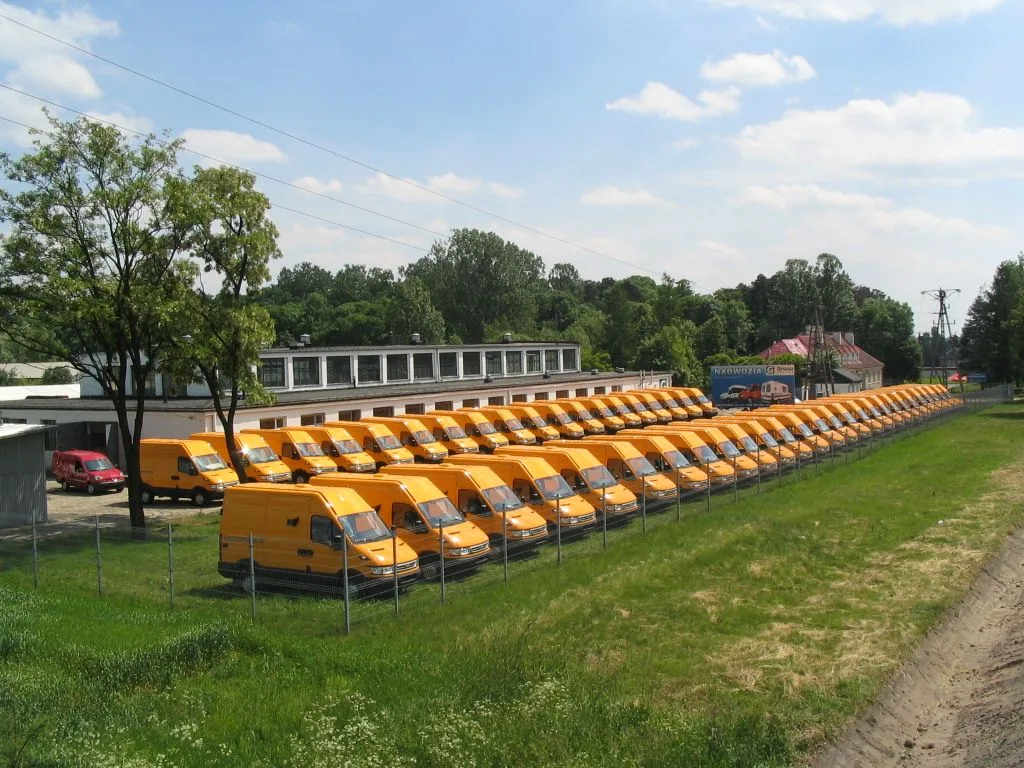
Gruau Polska was born out of Renault’s frustration at not having quality conversions for its vehicles in Poland. The manufacturer therefore calls on Gruau to train Polish bodybuilders. In response, Gruau prefers to study setting up its own operation in order to invest in this market of 40 million inhabitants at the time. Yvon Peurou and Éric Gruau choose to recruit a Franco-Polish director, Boguslaw Mazur, still in post today. The first site is created in the centre of the country, in an area where labour was plentiful. A second plant is set up in Vola, south of Warsaw, in 2012, close to manufacturers and logistics providers.
Gruau Polska now has around a hundred employees. It has developed a complete range of products dedicated to the Polish market and export, in collaboration with Gruau Le Mans for the French construction and public works market.
2002
A new lease of life for Labbé
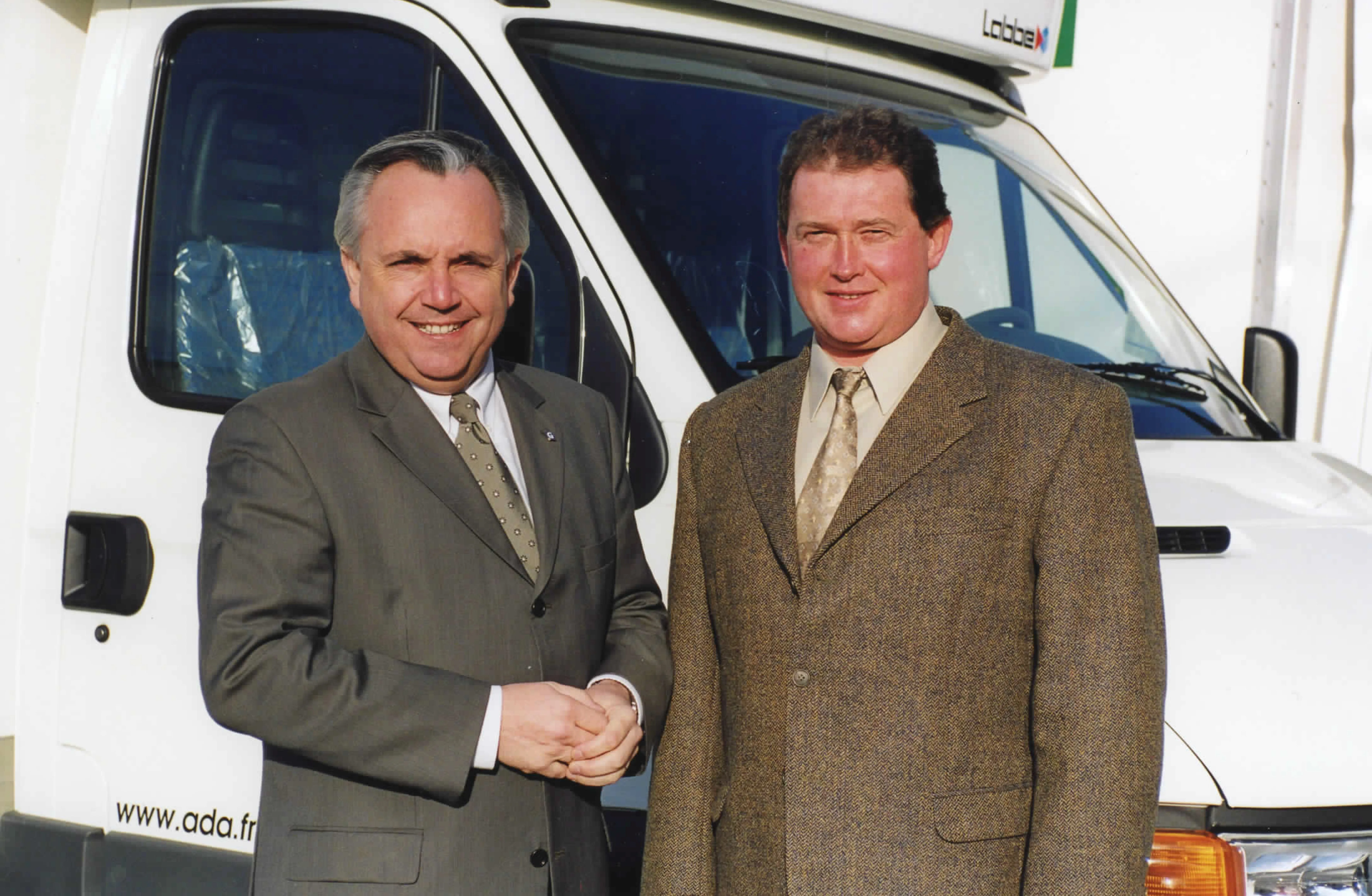
Based in Lamballe (Côtes-d’Armor) since its creation in 1948, Labbé enjoyed a strong family era with its founder Fernand Labbé and his two sons, Benoît and Pierre. After a difficult period and a spell under American shareholders, Labbé regains stability. Its two specialities are split: the Armoured Vehicles Department is sold, while the Large-Volume Vans Department returns to a family group and a long-term project with Gruau.
Philippe Quintin, the salaried manager at the time, was the driving force behind this partnership with Patrick Gruau.
Having become France’s number one in large-volume vans after twenty-two years within Groupe Gruau, Labbé employs 200 people and manufactures nearly 4,000 vans per year.
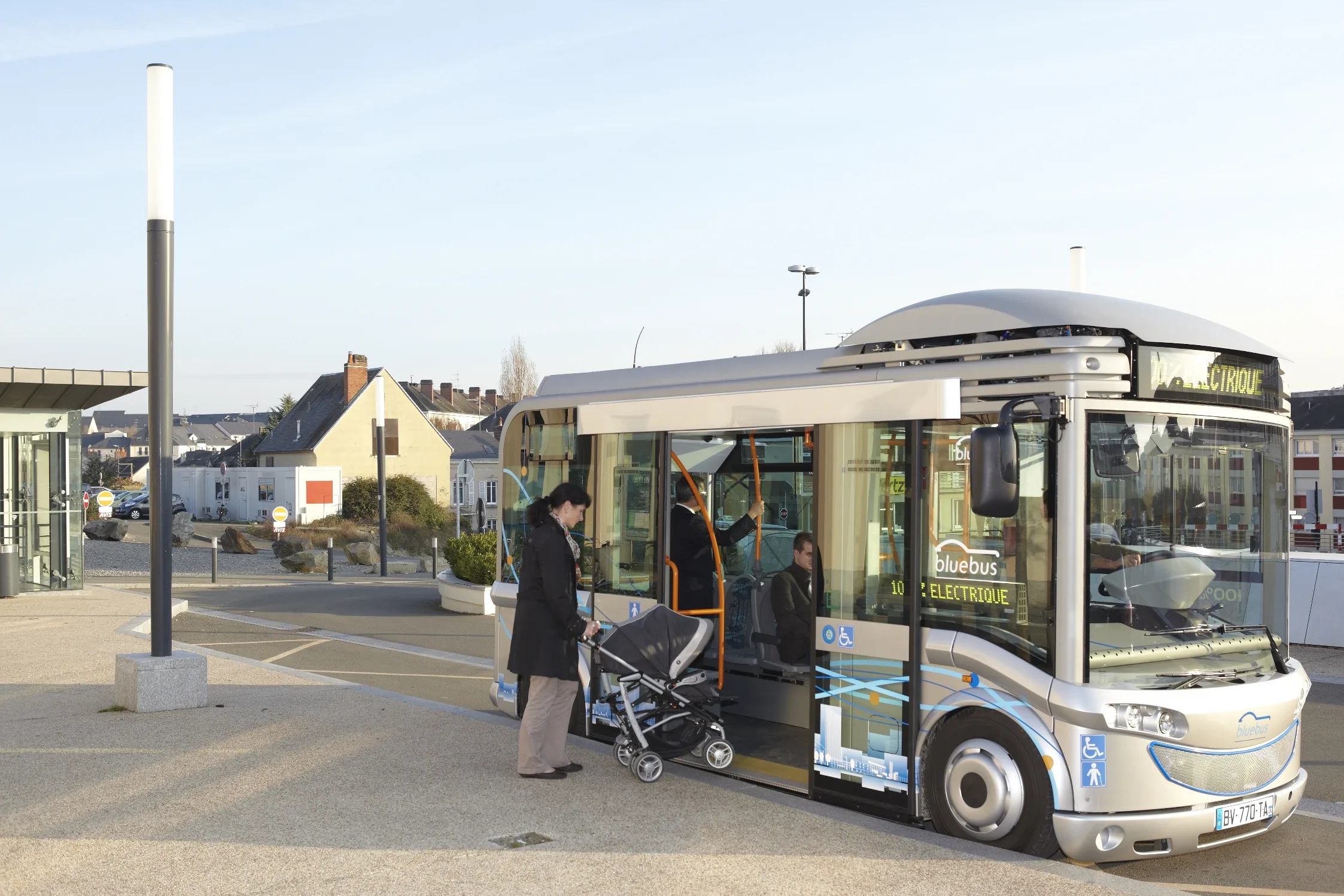
Le Bluebus : un véhicule innovant, propre, accessible à tous, en toutes circonstances.
2008
Gruau electrifies urban transport
After developing the microbus on its own, a new collective urban transport solution, Gruau partners with the Bolloré Group in a 50/50 joint venture to roll out a 100% electric version renamed Bluebus. Gruau brings its expertise in bus construction and electric drivetrain, and Bolloré, a new entrant to the market after its Bluecar experience, integrates its new lithium-ion polymer batteries, making this mobility solution unique in France.
In 2013, in accordance with their agreements, Bolloré buys out Gruau’s shares and production is gradually transferred to Bolloré’s new industrial site in Ergué-Gabéric. The Breton industrial group invests heavily and expands its 100% electric bus offering while sustaining the Bluebus range. Gruau, for its part, focuses exclusively on its core business as a bodybuilder. A fine adventure between two industrial groups.
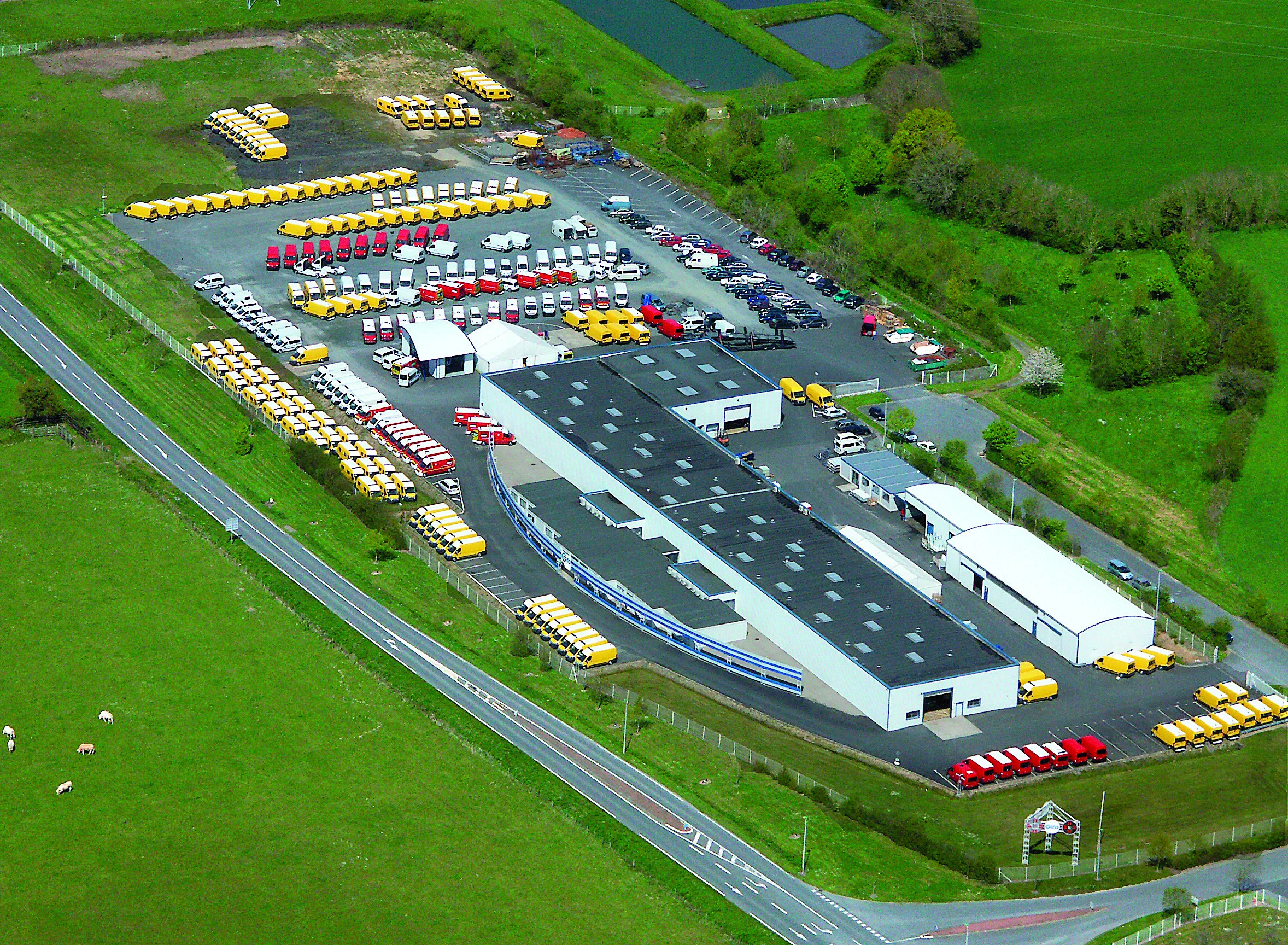
2010
Gifa and Collet consolidate leadership
The companies Gifa-Collet and Cogicar, based in Orne and Vendée, join Groupe Gruau. Spin-offs from the Heuliez Group, these were Gifa and Cogicar, specialising in ambulances, and Collet, originally a family business specialising in ambulances and funeral vehicles. The companies are acquired from Jean Caghassi after around ten years of discussions with Patrick Gruau.
The Mayenne-based group, number two in France in medical vehicles, thus acquires the market leader.
To date, the Group is the leader in France. The Gifa and Collet brands have been retained and are grouped within a single structure, Gruau Vendée, which employs 145 people between Saint-Laurent-sur-Sèvre and Argentan.
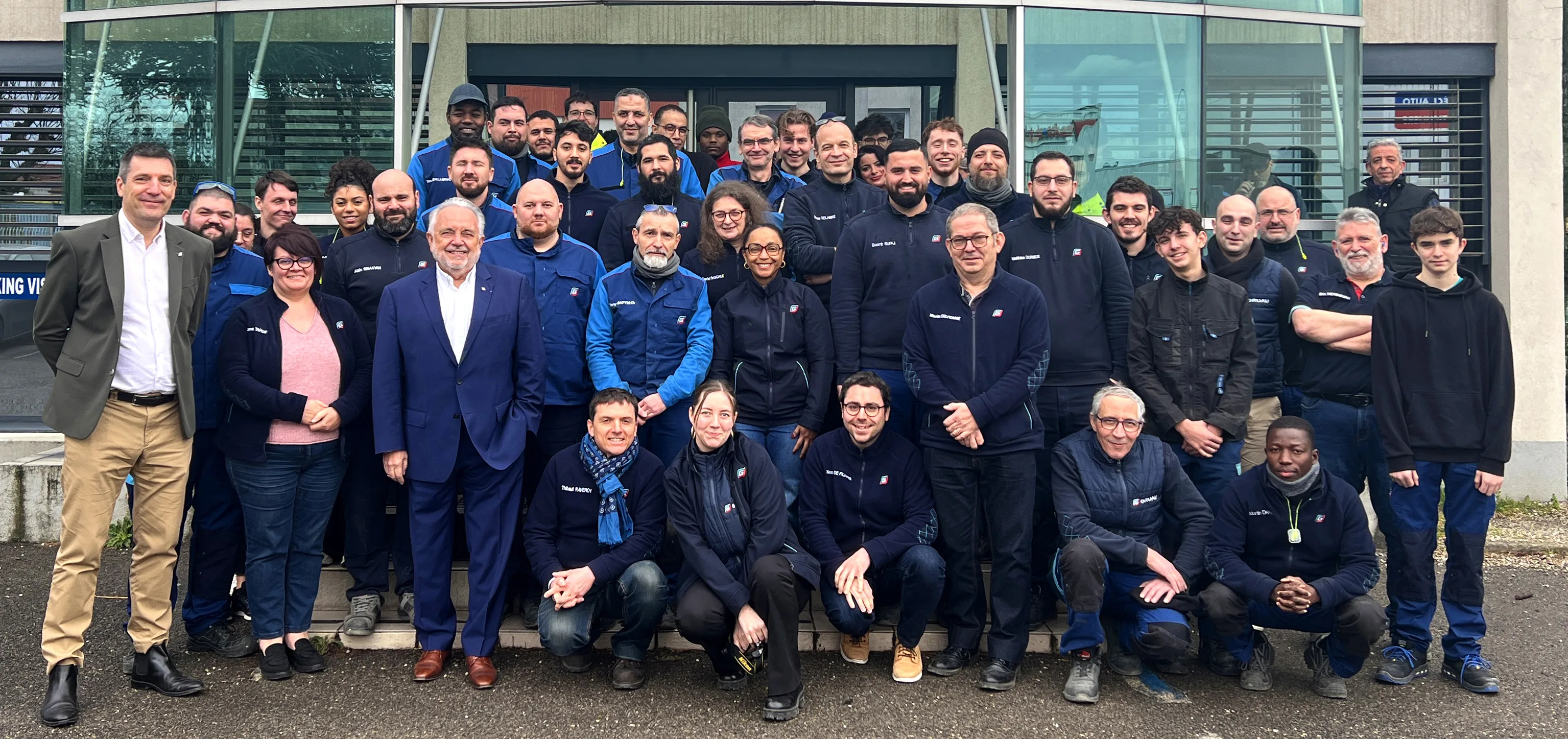
2013
Lanéry joins Gruau
Gruau invests in Greater Lyon, a historic land of bodybuilders. It acquires the company Lanéry.
Lanéry brings additional capabilities, including expertise in specialised vehicles for firefighters.
The brand is therefore retained for these specialised vehicles, while the company, renamed Gruau Lyon, now deploys other complementary and traditional Gruau activities (crew cabs, refrigerated vehicles, etc.) in its local market.
57 employees work there.
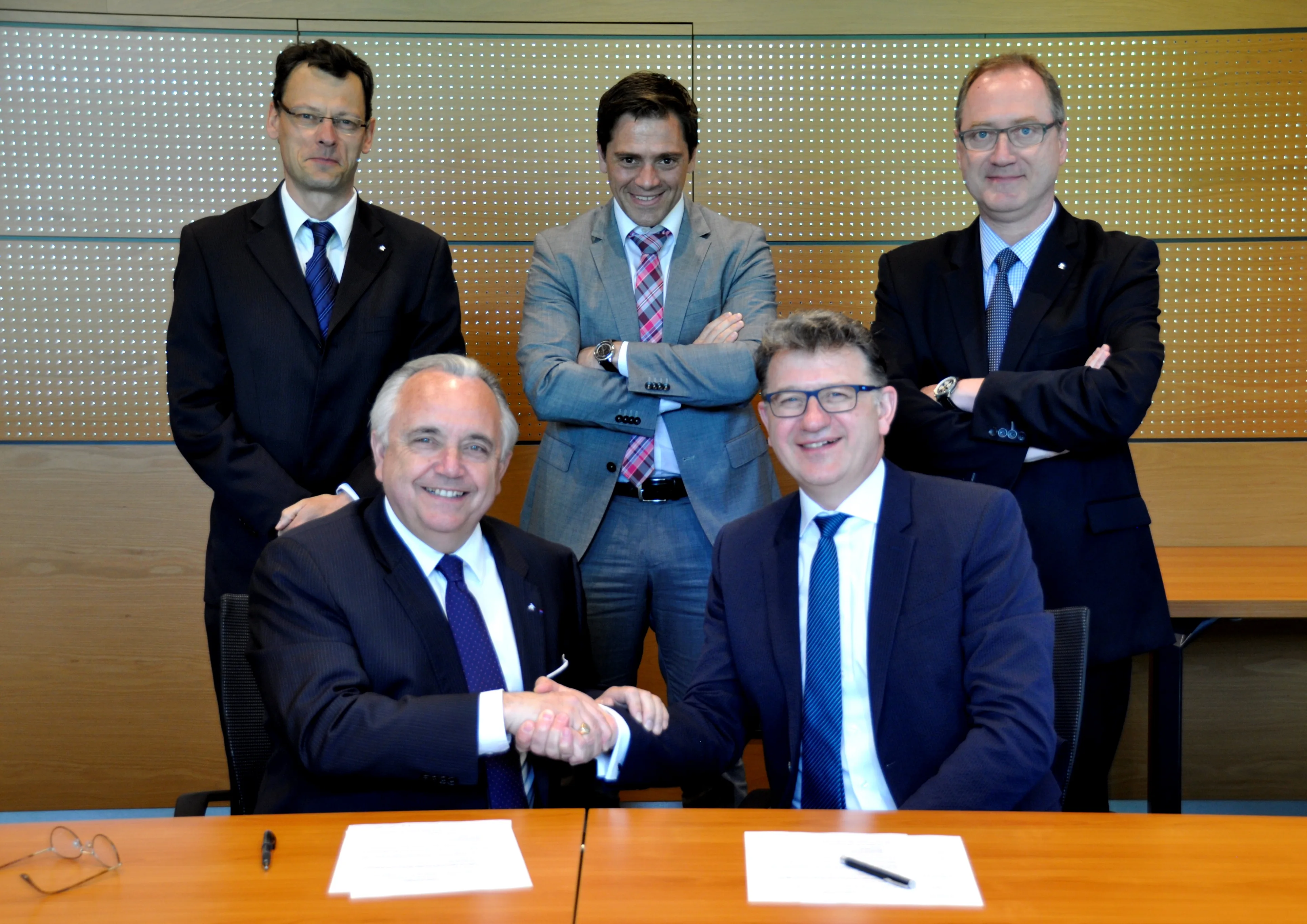
2016 Partenariat Sortimo
2016
Sortimo: a strategic partnership
Gruau creates a joint venture with Sortimo, one of the world leaders in vehicle racking and load securing systems. All products offered are compatible with one another. Gruau can thus distribute high-quality complementary (German) fittings. Sortimo develops its network in France and gains access to key account customers of the European leader in bodywork for light commercial vehicles.
A fine Franco-German alliance
The company Sortimo by Gruau has its own site in the Paris region, a distribution network and sales advisors available to professionals who purchase either directly or online.
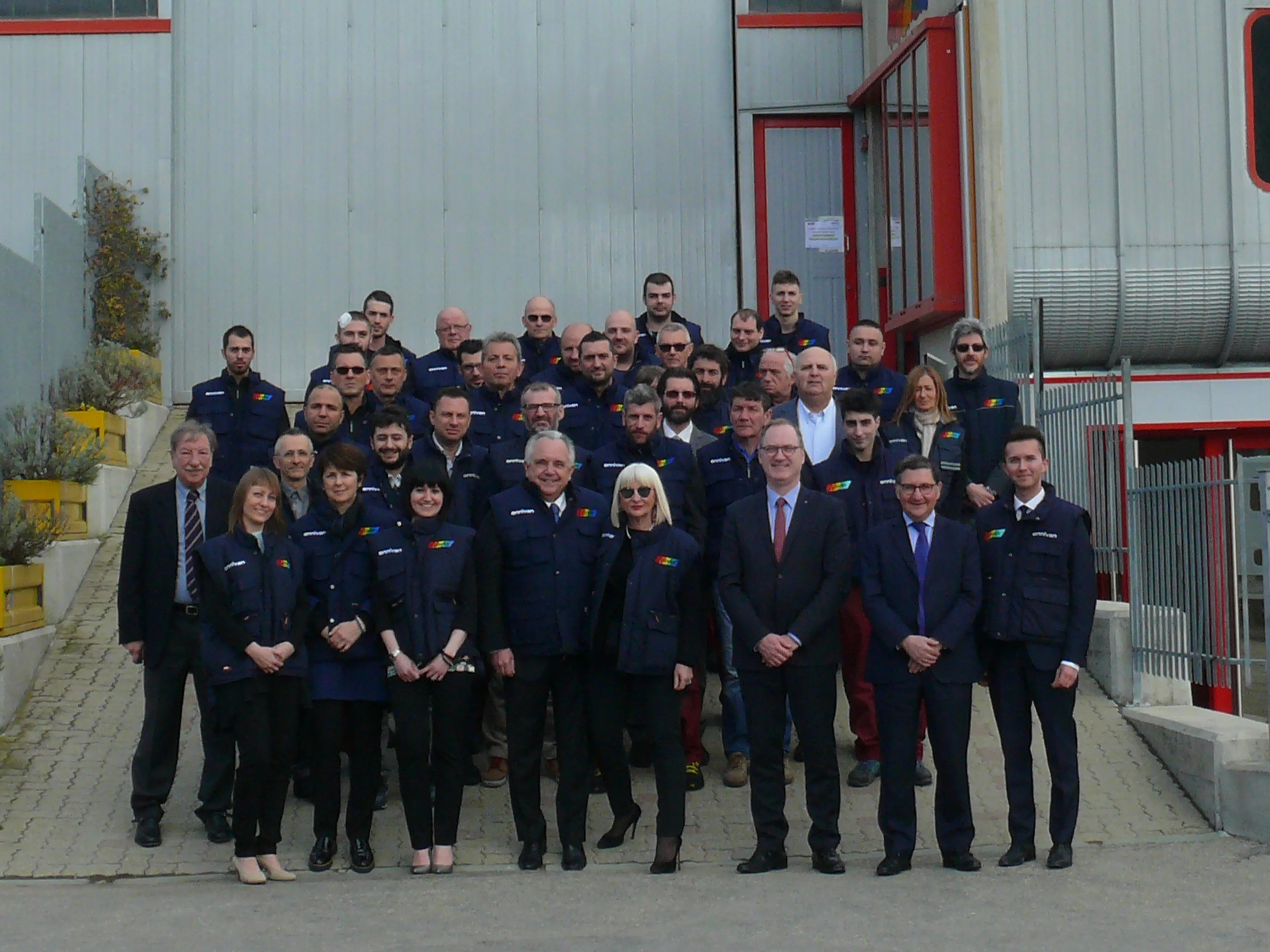
2017 Opération croissance externe Onnicar
2017
Gruau expands into Italy
Laura Francone runs the family company founded by her father, the Italian bodybuilder Onnicar, a thriving business specialising in aluminium tippers and vans “tuttoinlega” (all about lightness). As she approaches retirement, Laura chooses to sell not to an Italian competitor, but to a group that will sustain and develop the businesses. That is why she targets Gruau. In three months, the sale is organised and the handover prepared with Laura’s right-hand man, Dario Bianchi, the current managing director. The company brings valuable expertise to the Group with high value-added products in terms of weight and CSR : premium products that appeal not only to Italians but also to German, Swiss and Austrian professionals thanks to a range of specific tippers tailored to these markets.
40 people work at Onnicar.
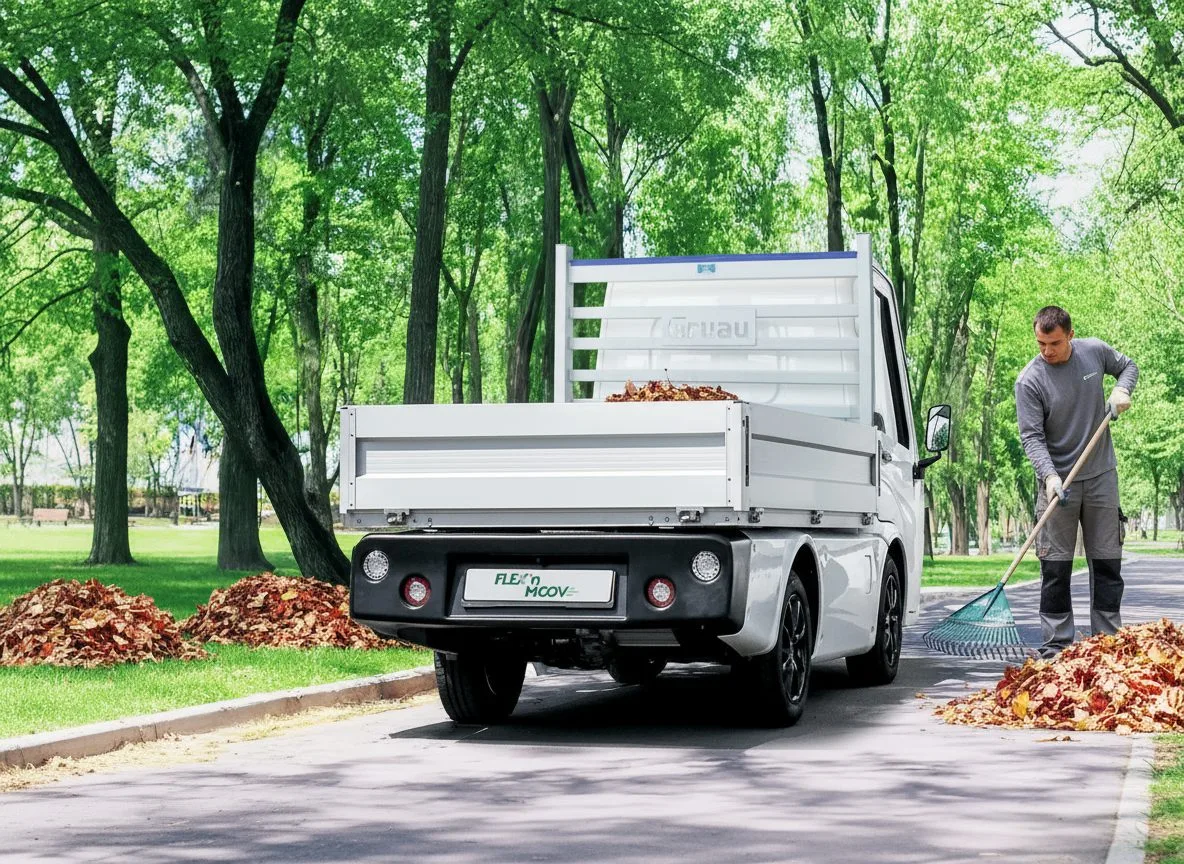
2022
Gruau launches Flex’n Moov
Constantly monitoring the markets, Gruau creates Flex’n Moov to adapt to new clean, local mobility uses for moving people, transporting goods and providing services. A true start-up within the Group, Flex’n Moov is an aggregator and designer of green mobility solutions for professionals.
The company distributes transport solutions (2, 3 and 4 wheels) and has just committed to retrofit to convert existing internal combustion vehicles into electric vehicles.
A future-ready organisation
Gruau evolves its organisation around two divisions, Urban Mobility and Medical Vehicles, while strengthening the development of OEM Products and rolling out its Gruau brand internationally.
With 16 sites (France, Poland, Italy, Algeria), the Group launches its 7th Company Project in 2023 and bases its development and long-term sustainability on its vision.